Having Internet access as soon as you arrive in Vietnam can make your trip much smoother and more convenient. Today, international travelers often choose between two options: buying an eSIM online or getting a traditional physical SIM at the airport. So, which option is better? The answer depends not only on the type of SIM, but also on your phone, data needs, and travel itinerary. Let’s compare both options in detail below.
eSIM and Physical SIM in Vietnam: The Basics
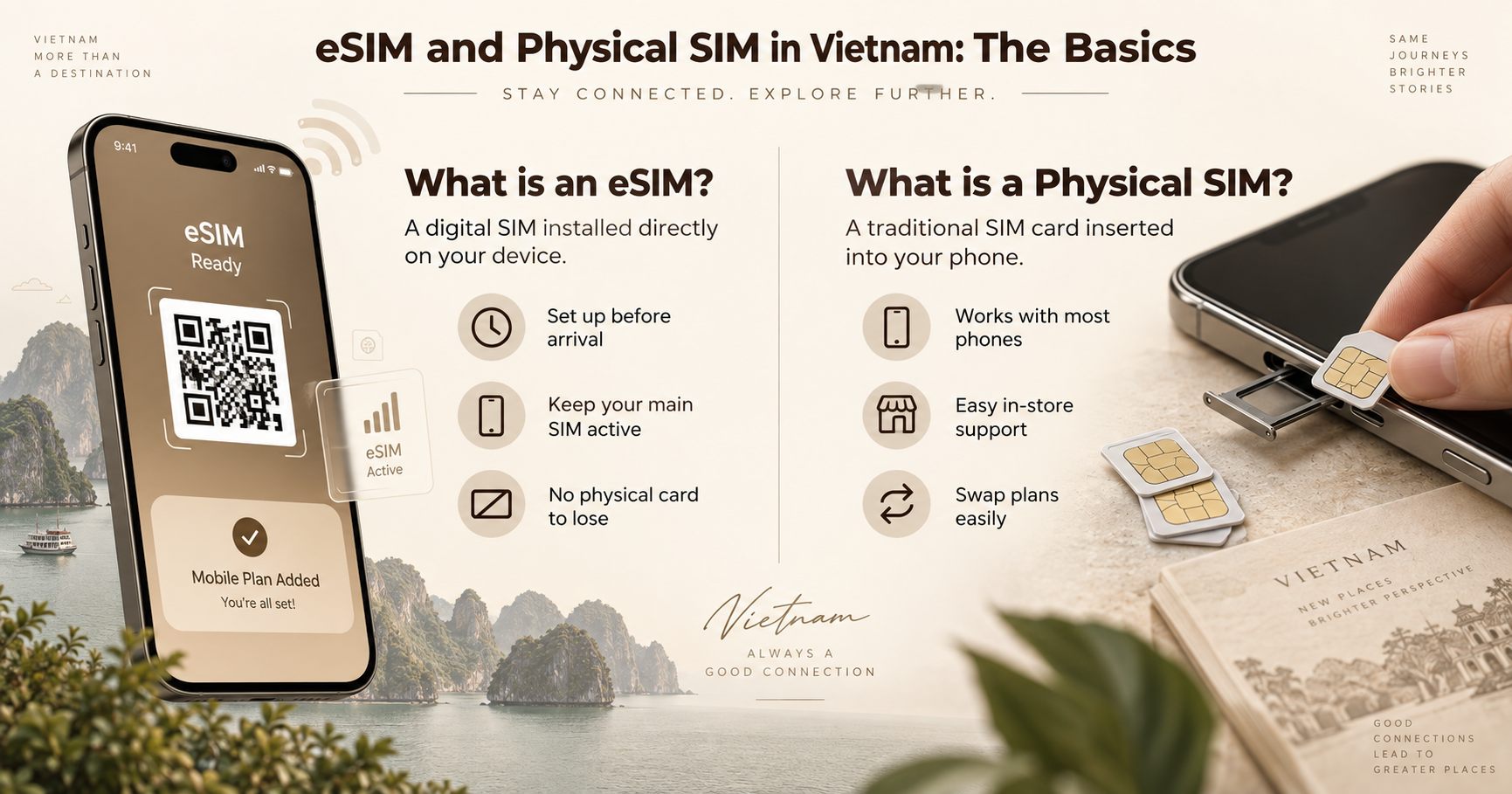
What is an eSIM?
An eSIM, or embedded SIM, is a digital SIM built directly into your device, so you do not need to insert a physical SIM card. Instead, you install an eSIM profile by following the provider’s instructions, usually by scanning a QR code or entering the details through an app.
Main benefits of an eSIM:
-
You can set it up before arriving in Vietnam.
-
You can keep your main SIM active if your phone supports Dual SIM.
-
There is no physical SIM card to lose, damage, or break while traveling.
What is a Physical SIM?
A physical SIM is a traditional SIM card that you insert into your phone’s SIM tray. Travelers can buy one at the airport after arrival or from official mobile network stores and authorized dealers in the city.
Main benefits of a physical SIM:
-
Works with most phones, including older devices that do not support eSIM.
-
Staff can help you register, install, and activate the SIM.
-
You can easily change your plan or mobile network by replacing the SIM card.
eSIM vs Physical SIM in Vietnam
To make the choice easier, here is a comparison of the most important differences between eSIM and physical SIM in Vietnam:
|
Criteria |
eSIM |
Physical SIM |
|
Installation |
Installed directly on your device, usually through a QR code or app |
Inserted into your phone’s SIM tray |
|
Device compatibility |
Requires an eSIM-compatible device, such as iPhone XR or later, Samsung Galaxy S20 series or later, Google Pixel, etc. |
Works with most devices that have a SIM tray, including older phones |
|
Vietnam phone number |
Depends on the plan. Some eSIMs are data-only, while eSIMs from Vietnamese providers may include a +84 number |
SIMs from Vietnamese mobile networks usually come with a +84 phone number for calls, SMS, and local services |
|
Data |
Depends on the provider and plan, with daily, weekly, or monthly options available |
Depends on the mobile network and plan; tourist packages often include generous data allowances |
|
Registration |
Depends on the eSIM type and provider. eSIMs issued by Vietnamese mobile networks must still follow local subscriber registration rules |
Vietnamese SIMs must be registered and verified according to local regulations |
|
Keeping your current SIM |
More convenient if your device supports Dual SIM/eSIM, allowing you to keep your main SIM and use the eSIM for data |
Depends on the number of SIM slots. Some phones have only one slot, so you may need to remove your main SIM |
|
Where to buy |
Online before your trip or directly from an international eSIM provider or Vietnamese mobile network |
At the airport, official mobile network stores, or authorized retailers in the city |
|
Convenience after arrival |
Can be used immediately if it has been installed and activated correctly before your trip |
Requires time to buy, register, and install the SIM after arrival |
Things to Know Before Buying a SIM/eSIM in Vietnam
-
Make sure your SIM is properly registered: Foreign travelers can use a valid passport to register a SIM in Vietnam. A SIM that is not properly registered or verified may be restricted or deactivated.
-
Check whether your eSIM includes a +84 number: Many travel eSIMs are data-only. If you need to make calls, receive SMS, or contact drivers and hotels, choose a plan that includes a Vietnamese phone number.
-
Choose the network based on your itinerary: Viettel generally has an advantage in coverage, especially if you plan to travel outside major cities or visit mountainous areas or islands.
-
Avoid SIMs from unknown sellers: Buy from official counters, trusted dealers, or reliable eSIM providers to reduce the risk of your SIM being blocked during your trip.
Should You Choose an eSIM or Physical SIM?
The best choice depends on your device, length of stay, and how you plan to use your phone during the trip.
-
For a short trip when you mainly need Internet: An eSIM is usually more convenient because you can buy and install it before your flight and connect as soon as you arrive in Vietnam.
-
If you need a Vietnamese phone number: Check whether the plan includes a +84 number, calls, and SMS. Both physical SIMs and some eSIMs can provide these features.
-
If your phone does not support eSIM: A physical SIM will be the more suitable and easier option.
-
If your itinerary includes mountains, islands, or remote areas: Choose a mobile network with good coverage at your destination rather than deciding only based on the SIM type.
-
If you are traveling in a group or need regular contact with drivers, guides, or business partners in Vietnam: A plan with a local phone number can be more convenient.
-
If you want everything ready before your trip: An eSIM gives you an advantage because most of the purchase and setup process can be completed before departure, without having to look for a SIM counter after landing.
Common Mistakes to Avoid
-
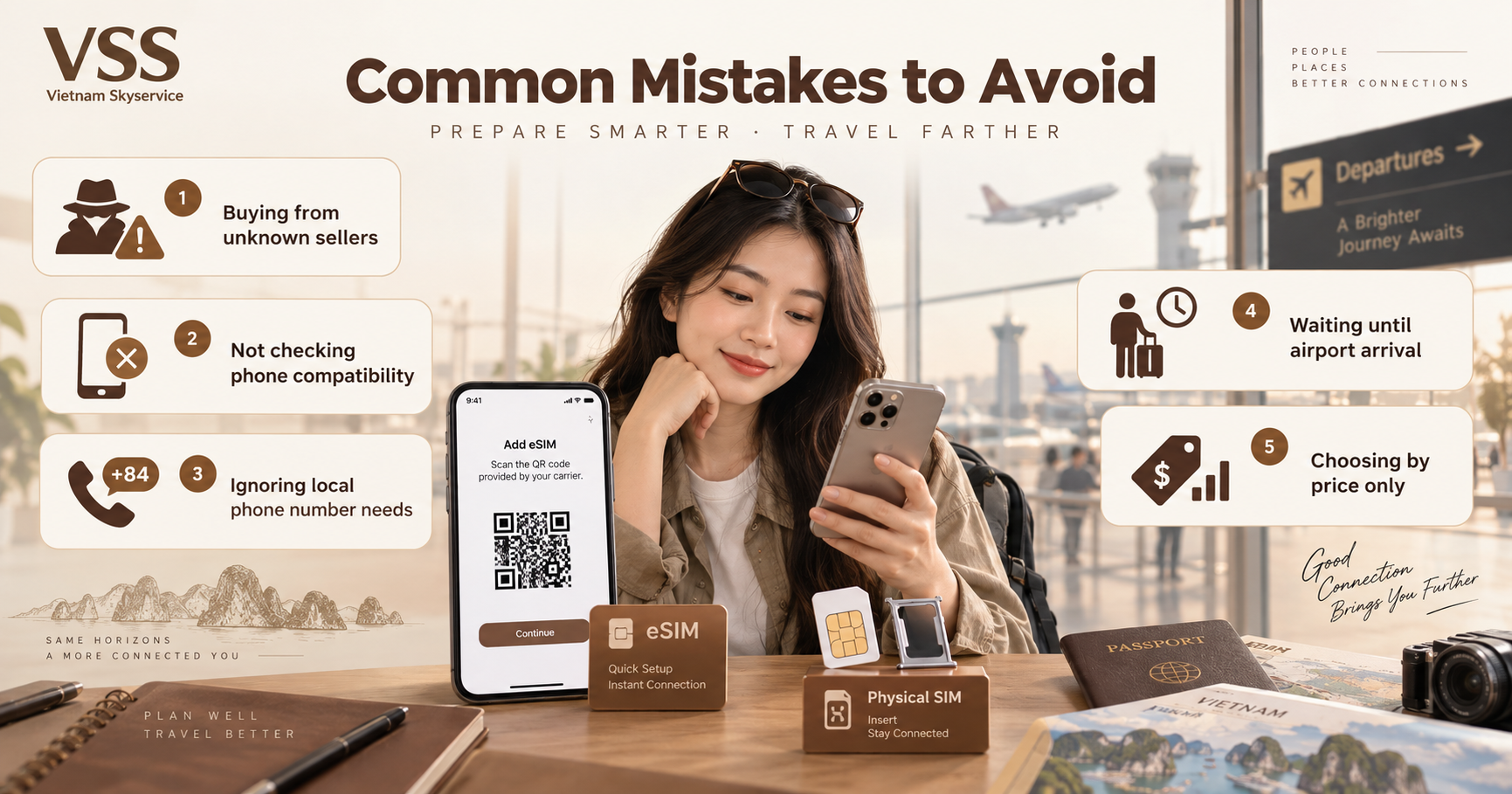
Buying a SIM from an unknown seller: A SIM registered with incorrect information may be restricted or deactivated during use.
-
Not checking your phone before buying an eSIM: Not every phone supports eSIM, and some devices may not work with every eSIM provider.
-
Not checking whether the plan includes a phone number: Many travel eSIMs provide data only. If you need calls or SMS, choose a plan that includes a +84 number.
-
Waiting until you arrive at the airport to buy a SIM: During busy periods, you may spend extra time finding a counter, registering your SIM, and activating it.
-
Choosing based on price alone: Also check the data allowance, validity period, and network coverage for your itinerary.
Prepare Your SIM/eSIM Before Arriving in Vietnam
After landing, you will often need Internet right away to message your driver, open Google Maps, contact your hotel, or let your family know you have arrived. After a long flight, spending more time looking for a SIM counter, comparing plans, and waiting for registration can be inconvenient.
Along with airport pickup and drop-off, car rental, round-trip, and other travel support services, Vietnam SkyService also provides SIM and eSIM options for travelers visiting Vietnam.
If your phone supports eSIM, you can register online in advance and activate it when you arrive. VSS currently offers a 15GB high-speed data package valid for 15 days, with a local phone number and 4G/5G connectivity.
Instead of waiting until you arrive at the airport to arrange your connection, you can prepare your SIM/eSIM together with the other services you need for your trip and stay connected from your first moments in Vietnam.
Final Thoughts
Both eSIM and physical SIM can provide reliable connectivity while traveling in Vietnam. If your phone supports eSIM and you prefer to prepare everything before your trip, an eSIM is usually the more convenient option. If your device does not support eSIM or you prefer direct assistance with registration and setup, a physical SIM remains a practical choice.