Traveling in Vietnam is exciting not only because of its stunning landscapes and diverse cuisine, but also because visitors have many ways to get around between cities and within urban areas. In this article, VSS summarizes the main transportation options in Vietnam: from domestic flights, trains, buses, private cars with drivers, taxis and ride-hailing apps, helping you choose the most suitable mode of transport based on your available time, group size, luggage and type of itinerary.
Overview of transportation options in Vietnam
Depending on distance, budget and travel style, you can combine multiple modes of transport:
-
Between major cities (intercity): Prioritize domestic flights, trains, sleeper buses, private cars with drivers.
-
Within cities (urban transport): Taxis, ride-hailing apps, rented motorbikes, public buses.
Each option has its own pros and cons, suitable for different types of travelers: solo travelers, couples, families, groups of friends, passengers with lots of luggage, or experience-focused travelers.
1. Domestic flights
When to choose flights?
Domestic flights are optimal when:
-
You have limited time and want to move quickly between regions (e.g., Hanoi – Da Nang, Hanoi – Ho Chi Minh City, Da Nang – Nha Trang).
-
Your itinerary combines multiple regions: North + Central + South in one trip.
-
You travel with family including young children or seniors and want to avoid very long road journeys.
Advantages
-
Time-saving: Main flight segments take only about 1-1.5 hours (excluding airport transfers and check-in time).
-
Frequent flights: Major routes have many departures throughout the day.
-
Competitive fares: If booked early, you can find promotional tickets.
Disadvantages
-
You need to add time for airport transfers, check-in procedures and waiting.
-
Baggage limits: Cheap fares often include only carry-on; checked baggage must be purchased separately.
-
Less “road trip feeling”: You miss many scenic views along the way.
Who is it best for?
-
Travelers who prioritize time and have tight schedules.
-
Those covering long distances (over 500-600 km).
-
Families or groups who want to reduce fatigue from long road travel.
If you take domestic flights during your Vietnam trip, consider booking an airport transfer in advance to be picked up from the airport to your hotel or vice versa, especially when arriving late at night or early in the morning.

2. Trains
When to choose trains?
Trains are suitable when:
-
You want to experience Vietnam’s railway, enjoying coastal scenery (especially the Da Nang – Nha Trang – Phan Rang section).
-
Your schedule is not too tight, prioritizing experience over speed.
-
You travel between cities with convenient train stations: Hanoi – Hue – Da Nang – Nha Trang – Ho Chi Minh City.
Advantages
-
Beautiful scenery: Many sections run along the coast, through mountain passes and rural areas.
-
Comfortable movement: You can walk around, buy food and drinks on board.
-
Safety: Accident rates are lower compared to some road transport options.
Disadvantages
-
Long travel time: Hanoi – Ho Chi Minh City can take over 30 hours; Hanoi – Da Nang about 15-17 hours.
-
Fixed schedules: Less flexible than flights or buses.
-
Some trains are older, with basic amenities (depending on train type and seat/berth class).
Who is it best for?
-
Travelers who enjoy experiences, want to “slow down” and sightsee.
-
Solo travelers or couples not under time pressure.
-
People who are afraid of flying or want to try a different way to travel.

3. Buses
When to choose buses?
Buses are suitable when:
-
You travel between nearby provinces and cities (e.g., Da Nang – Hoi An – Hue, Nha Trang – Da Lat, Ho Chi Minh City – Mui Ne – Da Lat).
-
You have a limited budget and prioritize saving money.
-
You visit destinations without convenient airports or train stations.
Advantages
-
Low cost: Usually cheaper than flights and trains, especially for short and medium distances.
-
Extensive network: Many operators serve small provinces and districts.
-
Various bus types: Sleeper buses, limousine buses with wide seats, private cabin buses.
Disadvantages
-
Variable travel time depending on traffic, operator and route.
-
Inconsistent quality: You need to choose reputable bus companies.
-
Less comfortable than private cars, especially for large groups or passengers with lots of luggage.
Who is it best for?
-
Backpackers and budget travelers.
-
Those traveling short to medium distances, comfortable sitting for several hours.
-
People with flexible schedules, not under strict time constraints.
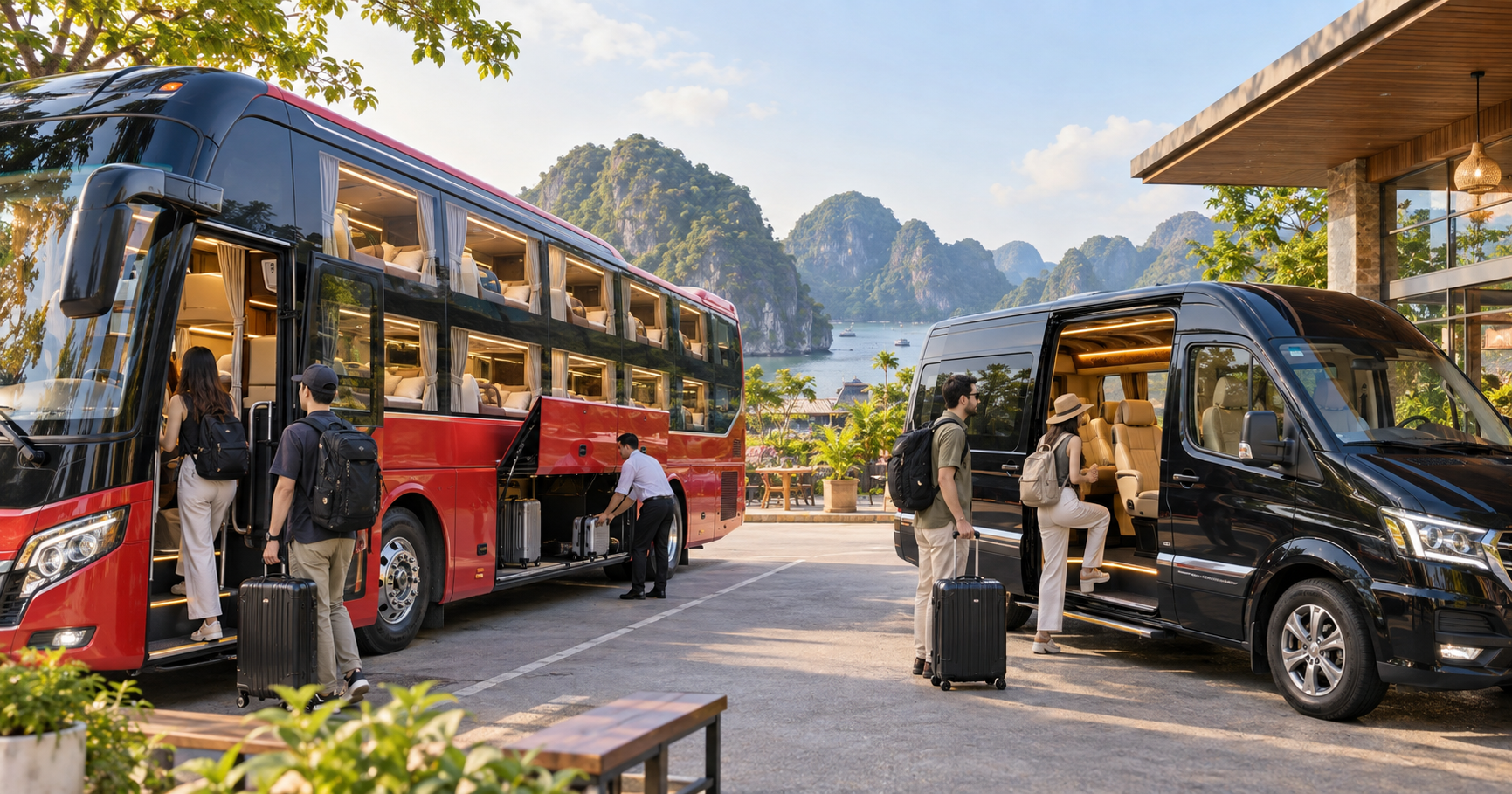
4. Private cars with drivers
When to choose a private car with a driver?
Private cars with drivers are suitable when:
-
You travel with family or groups of 3 or more.
-
You have lots of luggage: large suitcases, camera equipment, sports gear, etc.
-
You want full control over timing, stops and combining sightseeing along the way.
-
Your itinerary combines multiple destinations in one day or one segment (e.g., Hue – Da Nang – Hoi An; Nha Trang – Da Lat; Ho Chi Minh City – Mui Ne).
Advantages
-
Flexibility: You decide departure time, stops and duration at each place.
-
Comfort: No need to share the vehicle with strangers; no worry about missing scheduled departures.
-
Family-friendly: Young children and seniors can rest and eat along the way.
-
Easy with luggage: No strict baggage limits like flights or buses.
Disadvantages
-
Higher cost than buses, sometimes even higher than flights if traveling alone.
-
Need to choose a reputable provider to ensure safety and professional drivers.
Who is it best for?
-
Families, groups of friends, couples who prioritize privacy.
-
Travelers with lots of luggage or special equipment.
-
Those who want to combine transport and sightseeing in the same segment.
You can check our private car with driver service for advice on the right vehicle type based on your group size, luggage and itinerary.

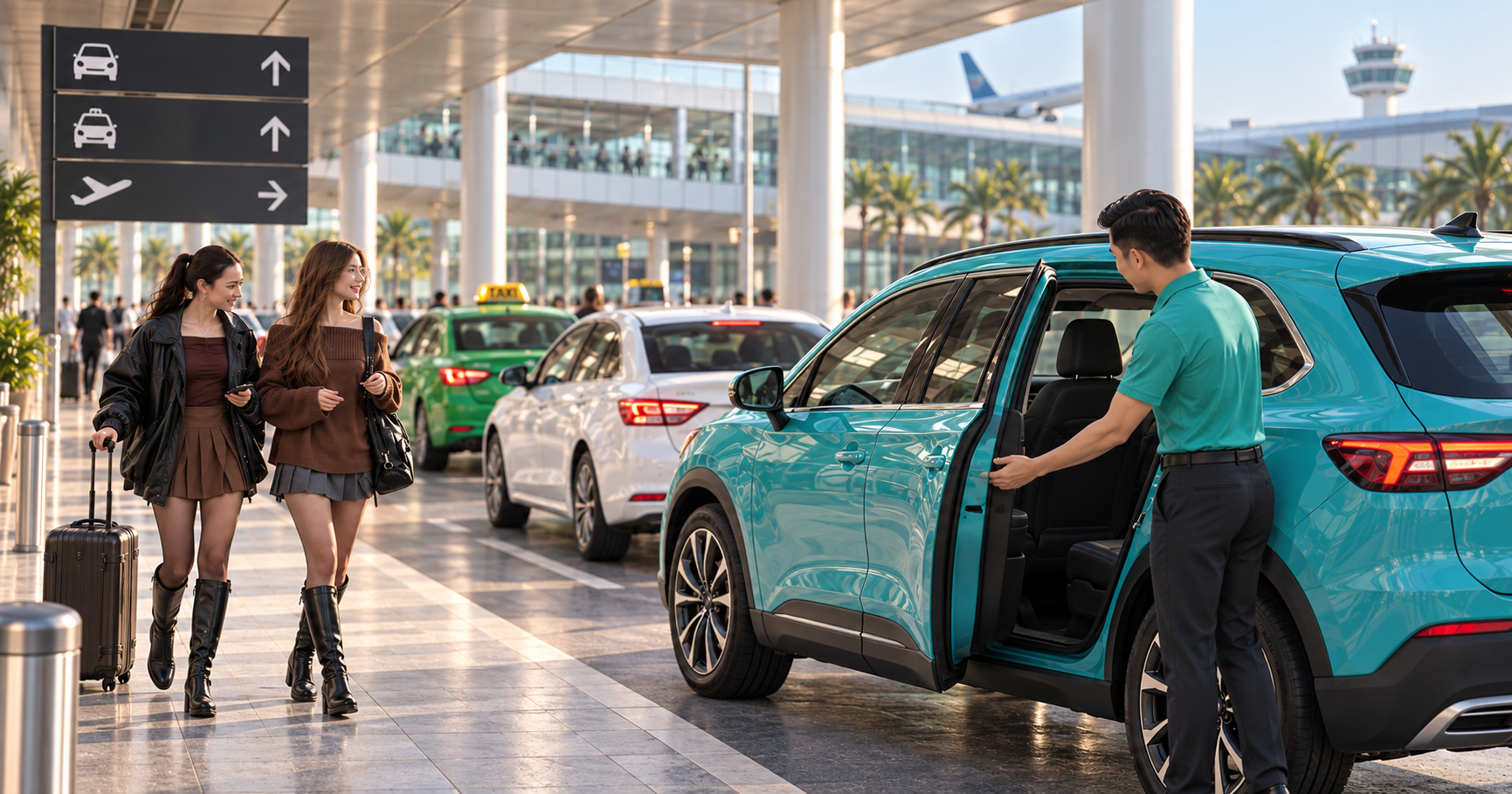
5. Taxis and ride-hailing apps
When to use taxis and ride-hailing apps?
Within cities, you will mainly use:
-
Traditional taxis: Mai Linh, Vinasun, G7, Taxi Group, etc.
-
Ride-hailing apps: Grab, Be, Xanh SM, etc. (depending on the city).
Ride-hailing apps usually allow you to:
-
See estimated fares and vehicle types (4-seater, 7-seater, motorbike).
-
Track route and license plate in the app.
-
Pay by cash or card, depending on your choice.
Advantages
-
Convenient: Book via app, no need to negotiate fares.
-
Wide coverage: Available in most tourist areas and city centers.
-
Various vehicle types: From motorbikes to 4-seaters, 7-seaters and premium cars.
Disadvantages
-
Fares can increase during peak hours, holidays or rainy days.
-
Some areas have pick-up/drop-off restrictions (around airports, some walking streets).
Who is it best for?
-
Most tourists travel within cities.
-
Solo travelers or couples who don’t need a full-day car.
-
People who want transparent pricing and easy trip tracking.
Not sure whether to choose a taxi or a private car with a driver? This comparison article will help you make a decision that fits your needs and budget.
Quick comparison table of transportation options
To make it easier to compare, here is a quick overview of the most common transportation modes in Vietnam. In most cases, especially for families and groups, private cars with drivers remain the optimal choice for comfort, flexibility and peace of mind.
|
Transport mode |
Speed |
Cost |
Comfort |
Route flexibility |
Best for |
|
Domestic flights |
Very fast (long distance) |
Medium – high |
Good |
Low (fixed flight times) |
Time-focused travelers, distances over 500–600 km |
|
Trains |
Slow – medium |
Low – medium |
Good |
Low (fixed schedules) |
Experience seekers, coastal scenery lovers |
|
Buses |
Medium |
Low |
Medium |
Low (fixed routes) |
Budget travelers, short to medium distances |
|
Private cars with drivers |
Medium – fast |
Medium – high |
Very high |
Very high (choose times and stops) |
Families, groups, travelers with lots of luggage, flexible itineraries |
|
Taxis / ride-hailing |
Fast (within cities) |
Low – medium |
Good |
Medium (short trips) |
Urban transport, no need for full-day car |
Learn more about private airport transfer services in Vietnam in this article.
Frequently Asked Questions (FAQs)
Conclusion
This comprehensive guide to transportation options in Vietnam shows that you have many flexible choices: from flights, trains, buses, private cars with drivers, taxis to ride-hailing apps. Each mode suits different travel styles: fast and efficient, road-trip experiences, or comfortable family and group travel.
If you want a smoother journey, especially for airport–hotel segments and group sightseeing, consider airport transfer and private car with driver services to get advice on vehicle type, route and cost that fit your itinerary.