
Leaving behind the modern, lively pace of coastal Da Nang, you only need to travel about 30 kilometres to reach the quieter atmosphere of Hoi An Ancient Town. The coastal road between the two destinations feels like a gradual change of scene, taking you from Da Nang’s brightly lit bridges and beachfront skyline to Hoi An’s weathered yellow walls, tiled roofs and nostalgic old streets. If you are planning this journey for the first time, this guide covers the practical details you need, from transport and travel times to sightseeing, food and how to make the most of a day in Hoi An.
How far is Da Nang from Hoi An, and how long does it take?
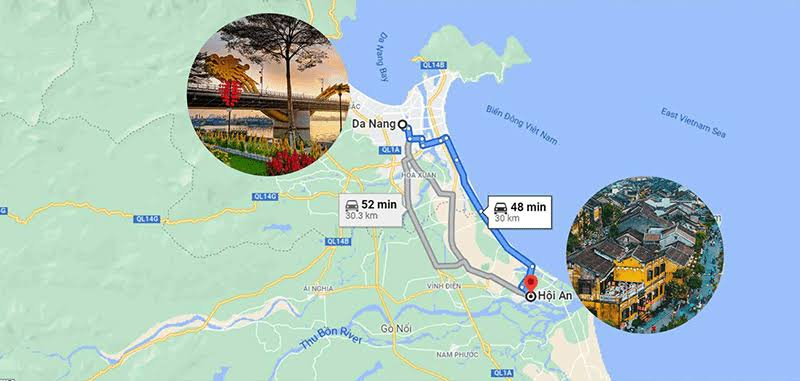
Hoi An Ancient Town is around 25–30 km from central Da Nang, depending on where you start and which route you take. From Da Nang International Airport, the distance to central Hoi An is also roughly 30 km. Travel time depends on the type of transport:
-
Private car, taxi or Grab: Around 50–60 minutes in normal traffic.
-
Motorbike: Around 45–70 minutes, depending on your starting point, riding speed and stops along the way.
-
Shared shuttle: Around 50–90 minutes, as the vehicle may collect and drop off several passengers.
-
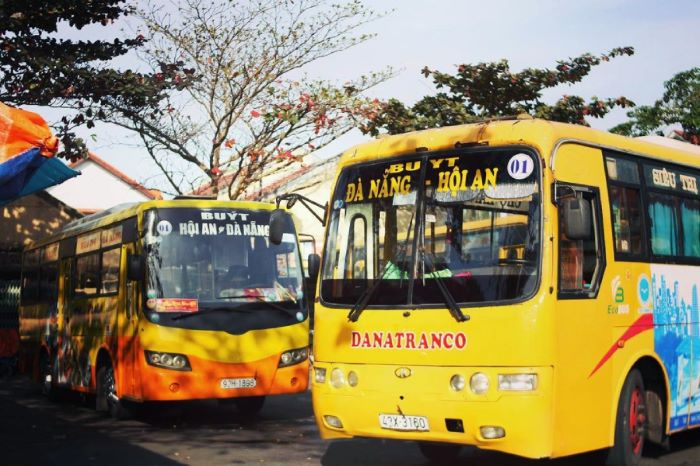
Public bus: Usually 60–90 minutes or longer, depending on the route, waiting time and number of stops.
Travel can take longer during rush hour, weekends, public holidays or bad weather. If you are travelling from Hoi An to Da Nang Airport for a flight, allow extra time for traffic, check-in and unexpected delays.
Routes from Da Nang to Hoi An
Depending on where you are starting from, there are two commonly used routes between Da Nang and Hoi An.
-
Coastal route: Vo Nguyen Giap → Truong Sa → Lac Long Quan → Hoi An. This route is convenient if you are staying around My Khe Beach and want a more scenic drive, with easy access to Non Nuoc and the Marble Mountains.
-
Southern city route: Vo Chi Cong → Tran Dai Nghia → Hoi An. This route is more convenient if you are starting from Da Nang International Airport or the western side of the city and want to head directly towards Hoi An.
Ways to travel from Da Nang to Hoi An
|
Transport |
Estimated time |
Estimated cost |
Best for |
|
Private car with driver |
40–60 minutes |
Depends on vehicle and itinerary |
Families, groups, travellers with luggage |
|
Grab or taxi |
40–60 minutes |
Around VND 300,000–500,000 |
Travellers wanting a direct, quick ride |
|
Shared shuttle |
50–90 minutes |
Around VND 120,000–180,000 per person |
Solo travellers or couples |
|
Public bus |
60–90 minutes or longer |
Low cost |
Budget travellers |
|
Motorbike |
45–70 minutes |
Around VND 120,000–200,000 per day |
Travellers who value flexibility and stopovers |
Note: Actual prices may vary depending on the travel period, especially during public holidays and Tet, as well as the vehicle type, exact pick-up and drop-off points, and traffic conditions.
Private car with driver
If you are travelling with family, a group of friends, elderly passengers, young children or several pieces of luggage, a private car with driver is one of the most convenient options.
The vehicle can pick you up directly from Da Nang Airport, the railway station or your hotel and take you straight to your accommodation in Hoi An. You can also arrange the vehicle type and pick-up time in advance, which is especially useful for late-night flight arrivals.
Vietnam Sky Services offers airport pick-up and drop-off services, Da Nang–Hoi An transfers and customised chauffeur-driven journeys based on individual travel needs.
Grab and taxi
Grab and taxis are suitable for travellers who want to leave immediately without booking a car in advance. Under normal traffic conditions, the journey usually takes around 40–60 minutes.
-
Grab: Shows the estimated fare in the app before you confirm the ride.
-
Taxi: Widely available at Da Nang Airport, Da Nang Railway Station and major hotels.
Grab and taxi fares may increase during rush hour, public holidays, Tet or poor weather. If three or more people are travelling with several suitcases, a seven-seater vehicle may be more practical than a standard sedan.
Shared shuttle
A shared shuttle is a practical option for solo travellers or couples who want to spend less than they would on a private vehicle while still travelling in reasonable comfort.
Shuttles usually operate on fixed schedules and collect passengers from Da Nang Airport, central Da Nang or designated meeting points. Because the vehicle may make several pick-up and drop-off stops, the journey generally takes longer than travelling by private car.
Public bus
Public buses are suitable for solo travellers with light luggage who are not in a hurry and want to experience local transport. Route information can be checked on the DanaBus website.
-
Route 02: Connects Da Nang Central Bus Station and urban areas of Da Nang with Hoi An – Cua Dai.
-
Route 01SB: Serves passengers travelling from Da Nang International Airport to the Hoi An – Cua Dai area.
Routes, operating hours and service frequency may change, so check the latest DanaBus information before travelling.
Motorbike
Travelling by motorbike suits those who value freedom and want to stop whenever they like along the Da Nang–Hoi An route.
The coastal road is relatively flat and straightforward, with several convenient places to stop, including My Khe, Non Nuoc and the Marble Mountains. You can easily pause for photos, coffee, a beach break or sightseeing without having to follow a fixed public transport schedule.
What is the best time of day to travel from Da Nang to Hoi An?
Because the distance is only around 30 km, you can travel from Da Nang to Hoi An at almost any time of day. However, the best departure time depends on how much time you plan to spend in Hoi An.
Travelling in the morning
If you want to spend a full day in Hoi An, leave Da Nang at around 7:00–8:00 am.
The weather is usually more comfortable at this time, the Ancient Town is not yet too crowded and morning activity is already beginning. It is a good time for walking, visiting Hoi An Market, having breakfast or exploring before the midday heat sets in.
Travelling in the early afternoon
If your main goal is to experience Hoi An in the late afternoon and evening, consider leaving Da Nang at around 2:30–3:30 pm. This allows you to avoid some of the midday heat while still having enough time for coffee, a walk around the Ancient Town, dinner and the lantern-lit streets after dark.
Times to keep in mind
Traffic is generally heavier in urban areas of Da Nang from around 7:30–9:00 am and 4:30–6:30 pm.
If you are travelling by motorbike, avoid setting off around midday on particularly hot days, especially in summer. Even a journey of less than an hour can feel tiring under the Central Vietnam sun.
What is the best season to travel between Da Nang and Hoi An?
The period from around February to August is generally the most convenient for travelling between Da Nang and Hoi An, with drier weather that suits outdoor activities such as walking around the Ancient Town, visiting the beach and travelling by motorbike.
From around September onwards, Central Vietnam enters the wetter part of the year. At times, heavy rain and rising water levels can affect Hoi An. If you are travelling during this period, check the weather forecast before departure and keep your schedule flexible in case conditions change.
On rainy days, travelling by car is usually more convenient than going by motorbike, especially for families with children or travellers carrying a lot of luggage. If you still plan to ride, bring a raincoat, waterproof bags and avoid travelling in severe weather.

What to explore in Hoi An
If you only have one day in Hoi An, spend most of your time in the Ancient Town, then consider adding Hoi An Market, Tra Que Vegetable Village or An Bang Beach depending on your interests. These places are relatively close to one another, making them easy to combine without spending too much time in transit.
Hoi An Ancient Town
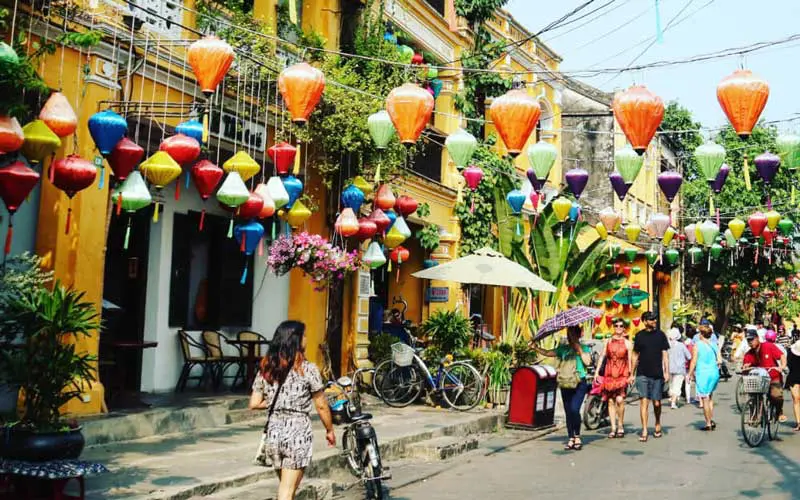
Hoi An Ancient Town deserves the largest share of your time, with its yellow-painted houses, old tiled roofs, assembly halls, craft shops and narrow streets running towards the Hoai River. Walking is the easiest way to explore. You can visit an old house, step inside an assembly hall, stop for coffee in a historic building or simply slow down and wander the streets rather than rushing through a long checklist of photo spots.
In the morning, the town is usually quieter and local daily life is easier to observe. From late afternoon into the evening, visitor numbers increase, the riverside becomes livelier and lanterns begin to glow across the old streets.
Hoi An Market
Located next to the Ancient Town, Hoi An Market is best visited in the morning or before lunch.
It is an easy place to find local dishes such as cao lau, mi Quang, Hoi An chicken rice, white rose dumplings and traditional sweet soups.
If you want to experience more of Hoi An’s everyday rhythm, arrive early while the market is busy with local trade and before the surrounding streets become crowded with visitors.
Tra Que Vegetable Village
Tra Que lies between the Ancient Town and An Bang Beach and is a good choice for travellers who want to leave the busier centre for a quieter side of Hoi An. The village is known for its vegetable gardens, small roads and rural surroundings. If you travel by bicycle, Tra Que and An Bang can easily be combined in the same half-day without too much travelling.
An Bang Beach
An Bang is only a short distance from the Ancient Town and is best visited in the afternoon. You can spend a few hours walking along the beach, relaxing by the sea or sitting at a beachfront café before returning to the Ancient Town as the weather cools.
If you only have one day, a comfortable plan is to explore the Ancient Town in the morning, visit Tra Que or An Bang in the early afternoon, then return to central Hoi An for dinner and the lantern-lit evening.

What to eat in Hoi An
Hoi An’s food reflects the flavours of Quang Nam, with several dishes that have distinctive ingredients and preparation styles. If you only have one day, focus on a few local specialities rather than trying to taste everything.
Cao lau
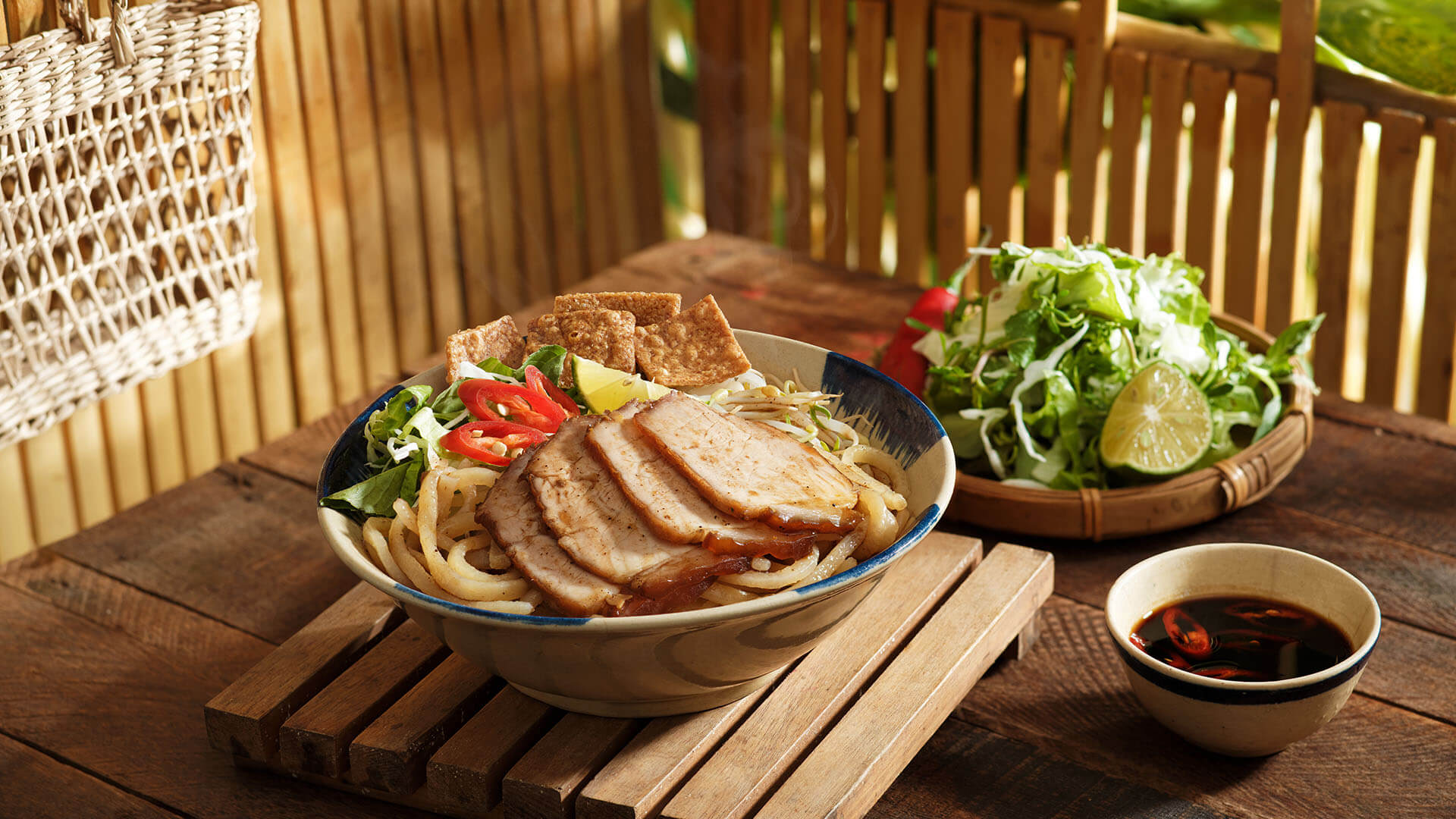
Cao lau is one of the dishes most closely associated with Hoi An. It features thick, slightly chewy noodles served with char siu-style pork, fresh herbs, bean sprouts and crispy toppings. There is very little broth; instead, the noodles are mixed with a small amount of rich sauce.
Compared with mi Quang, cao lau is drier and has a firmer texture, giving it a noticeably different character.
Mi Quang
Mi Quang features wide rice noodles served with toppings such as shrimp, pork, chicken or egg, depending on the restaurant. Fresh herbs, peanuts and toasted rice crackers are usually added, while only a small amount of broth is poured into the bowl rather than filling it completely like pho or bun.
The dish is popular throughout Quang Nam and Da Nang, but it is still worth trying if you want to explore the characteristic flavours of Central Vietnam.
Hoi An banh mi
Hoi An banh mi usually comes with a crisp baguette filled with combinations of pate, pork, Vietnamese cold cuts, fresh herbs, cucumber and house-made sauces.
Each shop has its own mix of fillings and seasonings, so flavours can vary considerably. It is a convenient choice for travellers who want a quick meal between sightseeing stops or a light bite in the late afternoon.
White rose dumplings
White rose dumplings are steamed dumplings with thin, soft and slightly translucent wrappers, usually filled with shrimp or pork.
They are topped with crispy fried shallots and served with a sweet-and-sour dipping sauce.
Portions are usually small, making them better as a shared dish or an extra plate alongside a main meal.
Banh dap
Banh dap combines crisp grilled rice paper with soft steamed rice sheets. The layers are broken into pieces and dipped in fermented anchovy sauce, while some places also serve them with stir-fried baby clams.
The appeal of the dish comes from the contrast between crisp and soft textures, together with the bold flavour of the dipping sauce typical of Central Vietnam.
Hoi An chicken rice
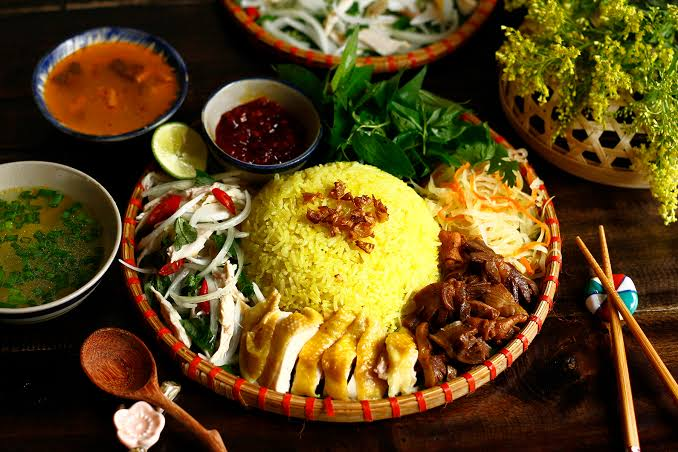
Hoi An chicken rice is made with fragrant yellow rice served with shredded or sliced chicken, Vietnamese coriander, onion, pickled vegetables and sauce. Some places also serve it with chicken offal or a light broth on the side.
It is an easy and satisfying lunch option, especially if you want something filling without being too heavy before continuing your walk around town.
Wontons
Wontons reflect some of the Chinese culinary influence that developed in Hoi An during its history as a trading port. They can be served in several forms, including soup, fried or tossed versions.
Fried wontons are often served with sauce and vegetables, while wonton soup is lighter and works well if you want a change from rice and noodle dishes.
Hoi An sweet soups
For dessert, try local sweet soups such as corn sweet soup, black bean sweet soup or lotus seed sweet soup. They are generally lightly sweet and particularly refreshing on hot days.
If you are visiting Hoi An for the day, a good approach is to choose cao lau or chicken rice as your main meal, then try white rose dumplings, banh mi or a sweet soup while walking around the Ancient Town.
Important tips for travelling from Da Nang to Hoi An
-
If you have several pieces of luggage or are travelling with children or elderly passengers, a car is generally more convenient than a public bus or motorbike.
-
During weekends, public holidays, Tet and peak travel periods, book transport early if you want more choice of departure time and vehicle type.
-
If you hire a private car and want to stop at the Marble Mountains or another place along the way, mention it in advance so the itinerary and price can be agreed beforehand.
-
For hourly or full-day car hire, confirm the rental period, waiting charges and any additional fees before the trip.
-
Motorbike riders should check the brakes, tyres, lights, mirrors and helmet before setting off, and avoid riding during heavy rain or late at night.
-
Central Vietnam can be very hot in summer, so bring sun protection and water. During the rainy season, carry a lightweight raincoat and waterproof bag.
-
If you are travelling from Hoi An to Da Nang Airport, leave extra time for traffic and airport procedures rather than planning around the minimum 45–60-minute driving time.
-
Families travelling with young children should ask the transport provider in advance about child seats if required.
Conclusion
We hope this Da Nang to Hoi An travel guide for first-time visitors helps you choose the right transport, plan your timing and organise your itinerary more easily. With only around 30 km between the two destinations, Da Nang and Hoi An are easy to combine in the same trip, whether you visit Hoi An as a day trip or stay overnight to enjoy the town at a slower pace.
Whether you are arriving at Da Nang Airport, travelling with family, or carrying multiple pieces of luggage, having your transportation arranged in advance can save time and make your arrival more comfortable. Vietnam Skyservice provides private car services and airport transfers between Da Nang and Hoi An, giving you a convenient way to start your journey without worrying about finding transportation after arrival.