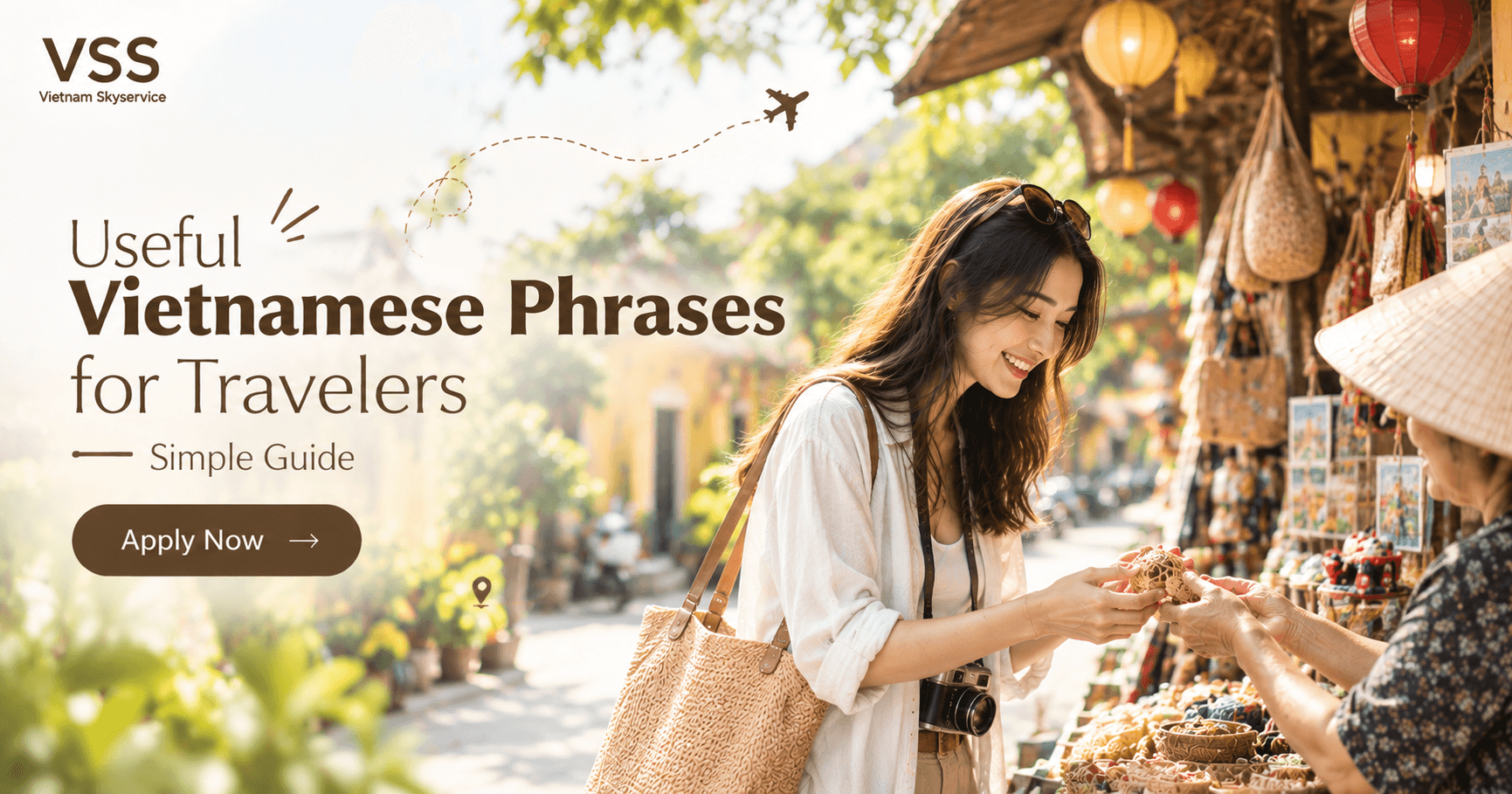
Useful Vietnamese phrases for travelers can make your trip smoother and more enjoyable. In this guide, VSS shares essential Vietnamese sentences for common situations such as greetings, asking prices, ordering food, asking for directions, taking taxis, hotel check-in, and basic emergencies.
Why learn a few Vietnamese phrases before your trip?
Vietnamese people really appreciate it when foreign visitors try to speak a few words in their language, even simple ones like “Xin chào”, “Cảm ơn”, or “Bao nhiêu tiền?”. These simple phrases help you:
-
Create a good impression with vendors, drivers, hotel staff, and locals
-
Bargain more gently and clearly when shopping
-
Order food, request less spicy dishes, or ask for the bill without too many gestures
-
Ask for directions, describe your destination, and handle unexpected situations more confidently
You don’t need to speak like a native. Just pronounce clearly, speak slowly, and combine your words with gestures and maps on your phone, and you can already manage basic communication.
Quick notes on pronunciation and tones
Vietnamese is a tonal language. The same sound with different tone marks can become completely different words. As a traveler, you only need to grasp a few basic principles:
-
Dấu sắc (´): rising tone, similar to a short question in English
-
Dấu huyền (`): low, falling to
-
Dấu hỏi (?): dipping–rising tone
-
Dấu ngã (~): rising, slightly “broken” tone
-
Dấu nặng (.): short, low, “stopped” tone
In practice, Vietnamese people often understand meaning from context, so don’t be afraid of making small mistakes. Just speak slowly and clearly, and combine your words with gestures or images, and you can already communicate.
Quick tips:
-
Speak slowly and clearly, word by word
-
Lightly emphasize the tones to add “music” to your speech
-
Combine pointing, opening maps, and showing images to support your words
Greetings and basic polite phrases
Starting a conversation with a few polite greetings will help you make a good impression right away.
|
English |
Tiếng Việt |
|
Hello (general) |
Xin chào |
|
Hello (to an older man) |
Chào anh |
|
Hello (to an older woman) |
Chào chị |
|
Thank you |
Cảm ơn |
|
Thank you very much |
Cảm ơn nhiều |
|
You’re welcome |
Không có gì |
|
Sorry / Excuse me |
Xin lỗi |
|
Yes (polite) |
Dạ / Vâng |
|
No |
Không |
Tip: Add “ạ” at the end of sentences (for example: “Cảm ơn ạ”, “Xin lỗi ạ”) to sound more polite, especially with older people or service staff.
Asking prices, shopping, and bargaining
When visiting markets, souvenir shops, or walking streets, you will use many phrases related to prices.
|
English |
Tiếng Việt |
|
How much is this? |
Cái này bao nhiêu tiền? |
|
This is too expensive |
Đắt quá |
|
Can it be cheaper? |
Rẻ hơn được không? |
|
Can you give a discount? |
Giảm giá được không? |
|
I’ll take this |
Lấy cái này |
|
Do you accept card? |
Có nhận thẻ không? |
|
Cash only? |
Chỉ tiền mặt thôi? |
|
Bill, please |
Tính tiền |
Notes:
-
“Tiền” = money in general; “đồng” is the currency unit (VND).
-
When bargaining, keep a friendly attitude, smile, and say “Rẻ hơn một chút được không ạ?”; this works better than pushing too hard.
-
If the seller cannot reduce the price, you can say “Để tôi xem thêm” and walk around; sometimes they will call you back with a better offer.
Ordering food and drinks
At restaurants, street food stalls, or cafés, you only need a few basic sentences to order comfortably.
|
English |
Tiếng Việt |
|
I would like to order |
Tôi muốn gọi món |
|
Can I see the menu? |
Cho tôi xem thực đơn |
|
I’ll have this dish |
Lấy món này |
|
One portion |
Một phần |
|
Two portions |
Hai phần |
|
No spicy |
Không cay |
|
Less spicy, please |
Ít cay thôi |
|
No cilantro |
Không rau mùi |
|
Water, please |
Cho tôi nước |
|
Bill, please |
Tính tiền |
|
Delicious! |
Ngon quá! |
Practical tips:
-
Point at the dish and say “Món này, một phần”; this is the fastest way in busy places.
-
If you have allergies, say clearly: “Tôi dị ứng [tôm / đậu phộng / sữa]” and point to the word on the menu or image.
-
At cafés, you can say: “Cà phê sữa đá, một ly” or “Trà đá, một ly”.
Asking for directions and finding places
Asking for directions is one of the situations you will use most often when exploring a city on your own.
|
English |
Tiếng Việt |
|
Where is…? |
… ở đâu? |
|
Where is the hotel? |
Khách sạn ở đâu? |
|
Where is the toilet? |
Nhà vệ sinh ở đâu? |
|
Is it far? |
Có xa không? |
|
Can I walk there? |
Đi bộ được không? |
|
Turn left |
Rẽ trái |
|
Turn right |
Rẽ phải |
|
Go straight |
Đi thẳng |
|
I’m lost |
Tôi bị lạc |
|
Please show me on the map |
Chỉ giúp tôi trên bản đồ |
Combine these with Google Maps, Maps.me, or offline map apps:
-
Open your destination, then show your phone to the person: “Chỗ này ở đâu ạ?”
-
Ask them to show directions on the map: “Anh/chị chỉ giúp em trên này được không?”
Taking taxis, ride-hailing, and motorbike taxis
Whether you use traditional taxis, Grab, Green SM, Be, or motorbike taxis, a few basic phrases will make your ride smoother.
|
English |
Tiếng Việt |
|
To this address, please |
Đến địa chỉ này |
|
How much to…? |
Đến … hết bao nhiêu? |
|
Please use the meter |
Bật đồng hồ tính tiền |
|
Stop here, please |
Dừng ở đây |
|
Keep the change |
Giữ tiền thừa |
|
I booked a Grab / Green SM / Be |
Tôi đặt xe Grab / Green SM / Be |
|
This is the correct address |
Đúng địa chỉ này |
Tips:
-
Always open your map and show the driver your destination in Vietnamese.
-
If the price is higher than expected, you can ask gently: “Sao đắt vậy anh/chị? Có đường nào gần hơn không?”
-
For ride-hailing apps, check the license plate, driver name, and car model before getting in.
Hotel check-in and basic requests
When you arrive at a hotel, hostel, or homestay, you will need some sentences to check in and ask important questions.
|
English |
Tiếng Việt |
|
I have a reservation |
Tôi đã đặt phòng |
|
My name is… |
Tên tôi là… |
|
What time is check-out? |
Mấy giờ trả phòng? |
|
Is breakfast included? |
Có bao gồm bữa sáng không? |
|
Where is the elevator? |
Thang máy ở đâu? |
|
The Wi‑Fi doesn’t work |
Wi‑Fi không hoạt động |
|
Can I leave my bags here? |
Tôi gửi hành lý ở đây được không? |
|
Is there a power socket? |
Có ổ cắm điện không? |
|
Is there a safe box? |
Có tủ an toàn không? |
Tips:
-
Show your booking code, confirmation email, or voucher to the receptionist.
-
If you arrive earlier than check-in time, ask: “Tôi đến sớm, có thể gửi hành lý trước được không ạ?”
-
If you have issues (noise, power outage, water, etc.), explain clearly and politely: “Phòng tôi hơi ồn / không có nước nóng, anh/chị xem giúp tôi được không?”
Emergencies and essential phrases
Hopefully you won’t need them, but it’s good to know a few basic sentences for unexpected situations.
|
English |
Tiếng Việt |
|
Help! |
Cứu tôi với! |
|
Call the police |
Gọi cảnh sát |
|
Call an ambulance |
Gọi xe cứu thương |
|
I need a doctor |
Tôi cần bác sĩ |
|
I lost my passport |
Tôi mất hộ chiếu |
|
I don’t understand |
Tôi không hiểu |
|
Please speak slowly |
Nói chậm một chút |
|
Where is a pharmacy? |
Ở đâu có hiệu thuốc? |
|
I have an allergy |
Tôi bị dị ứng |
Emergency phone numbers in Vietnam:
-
Police: 113
-
Fire: 114
-
Ambulance: 115
Save these numbers in your phone and add the contact details of your country’s embassy or consulate in Vietnam.
Using SIM/eSIM and apps to support communication
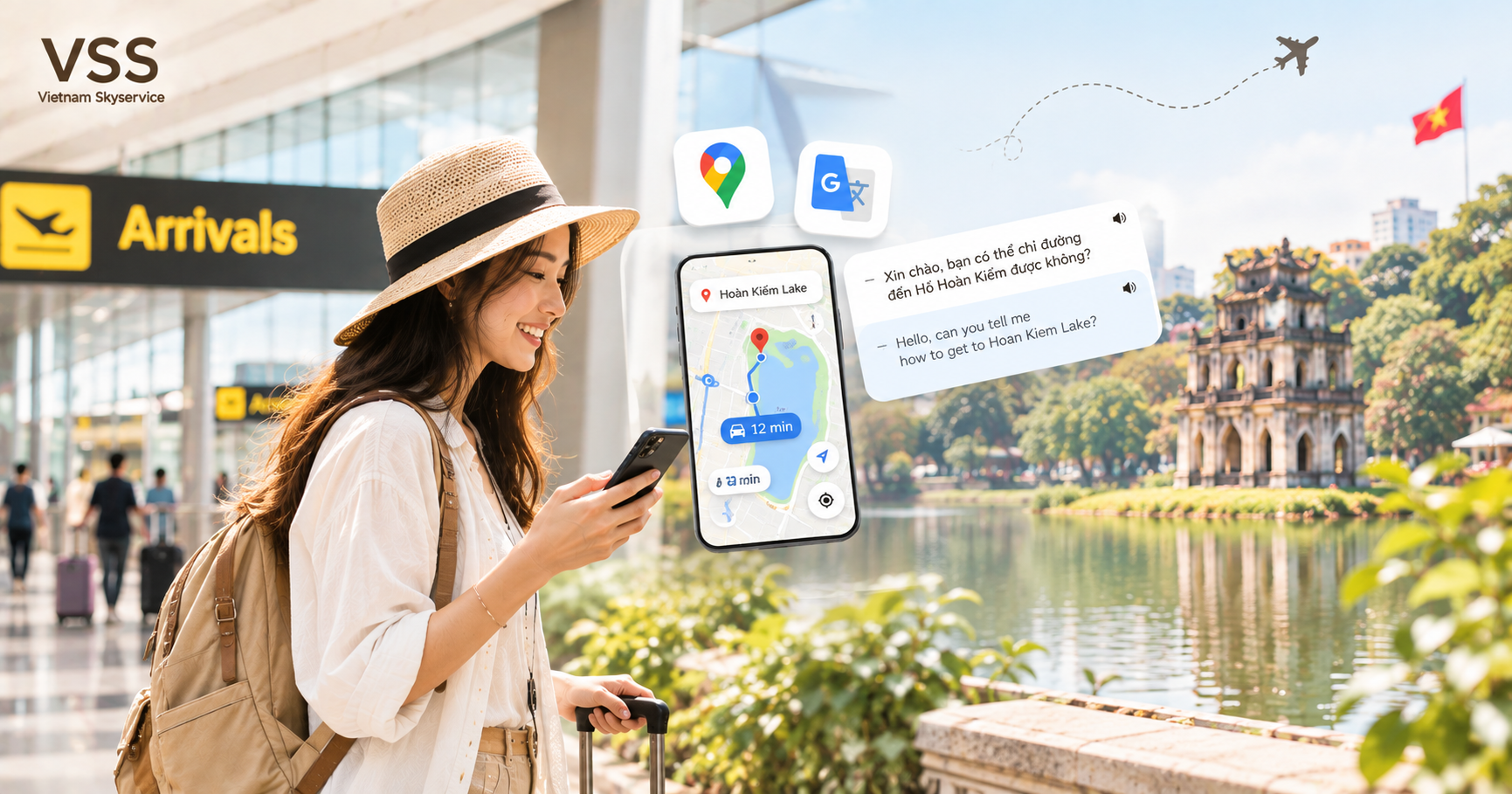
Even if you memorize a few phrases, having the Internet as soon as you land makes everything much easier. A local SIM card or eSIM is a convenient solution to:
-
Use Google Translate, Microsoft Translator, or other translation apps
-
Open maps, get directions, find restaurants, ATMs, pharmacies, and more
-
Message or call drivers, hotels, and tour guides without searching for Wi‑Fi
Before you fly, you should:
-
Check whether your phone supports eSIM
-
Install translation apps and download the offline Vietnamese language pack
-
Save some key phrases in your notes or take screenshots to show locals
You can explore suitable SIM cards for travelers in Vietnam here to get connected right from the airport.
Some cultural notes when communicating
-
Smile lightly and say “Dạ / Vâng” when receiving instructions or offers.
-
Avoid raising your voice, especially when bargaining or solving problems.
-
Use “anh / chị / cô / chú” instead of “bạn” when speaking to older people.
-
When entering a small shop or eatery, say “Xin chào” and wait for the staff to greet you back before ordering.
These small details make you look respectful and more likable in the eyes of locals.
Conclusion
Learning a few Vietnamese phrases before your trip not only helps you order food, ask prices, or find your way more easily, but also opens the door to friendlier interactions with local people. Using a local SIM card or eSIM to stay connected to the Internet as soon as you arrive in Vietnam, so you can use translation apps and maps on your phone, will make your trip much more independent, safe, and enjoyable.
If you need additional support with SIM cards, airport transfers, fast track services, or other services to make your Vietnam trip smoother, please contact the VSS team for advice tailored to your itinerary and needs.