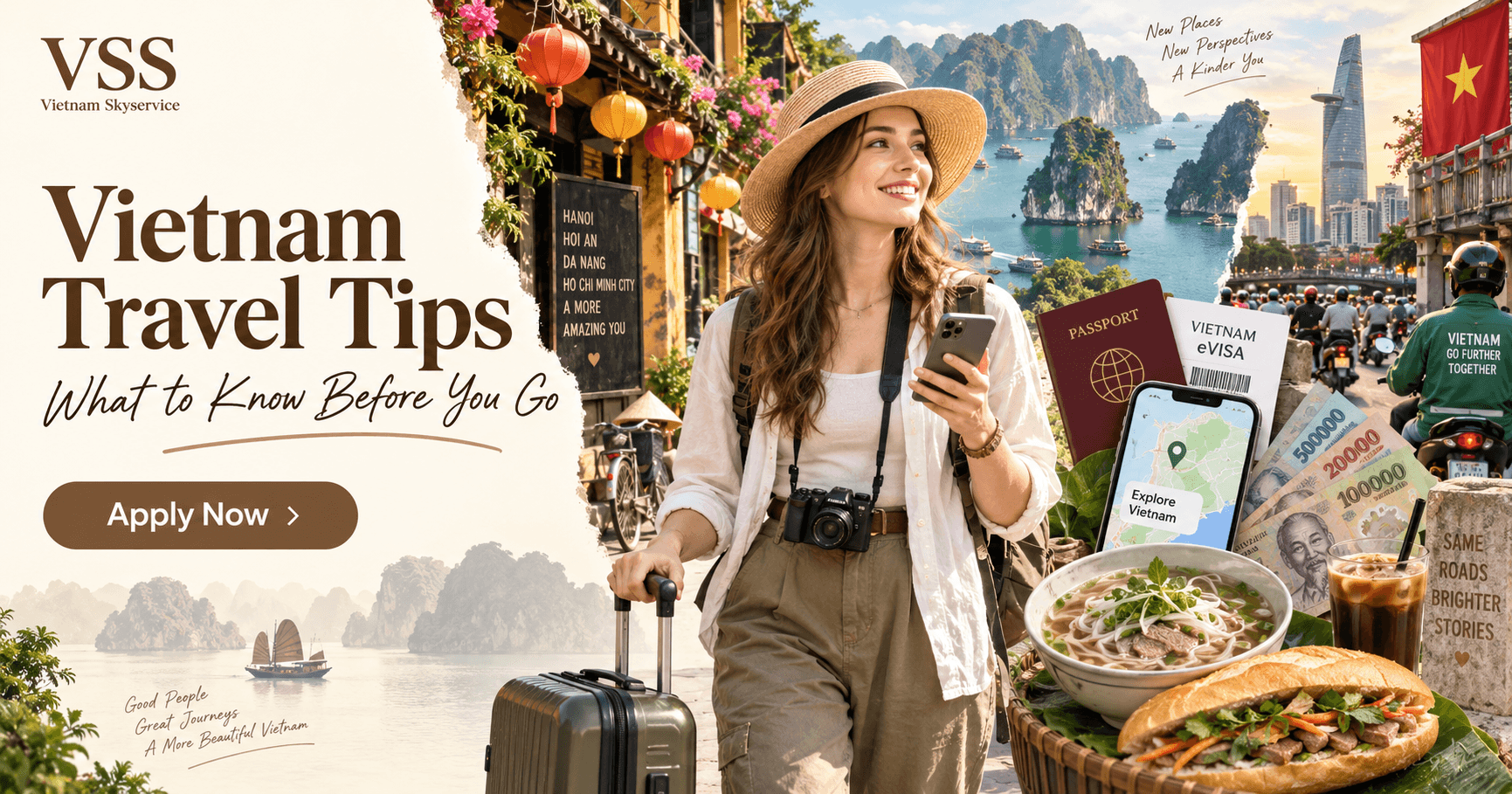
If this is your first time visiting Vietnam, it may take a little time to adjust to the country’s unique rhythm and culture. From busy streets filled with motorbikes and different communication styles to local dining habits, payment methods, and transportation, many everyday experiences may feel different from what you are used to. With a little preparation, your trip can become much smoother and more enjoyable. Below are practical Vietnam travel tips based on real experiences, especially for first-time visitors who want to better understand what to expect before arriving.
Check Your Visa Requirements Before Booking Your Flight
One of the first things I recommend doing before booking your flight to Vietnam is checking the visa requirements based on your nationality. Depending on your passport, you may be eligible for visa-free entry for a certain period or may need to apply for a Vietnam eVisa before your trip.
Checking this early can help you avoid unnecessary stress, especially when your departure date is approaching and there is limited time to fix potential issues. Before traveling, make sure that:
-
Your passport is valid for the required period.
-
All visa details match your passport information exactly.
-
You have saved your eVisa and important travel documents on your phone.
Vietnam Is Bigger Than You Think
One thing many first-time visitors quickly realize is that Vietnam is much larger than it appears on the map. Although Vietnam is a long and narrow country, the distance from the north to the south stretches over 1,600 km. This means traveling between regions can take more time than many travelers expect, especially if you are trying to visit multiple destinations during a short trip.
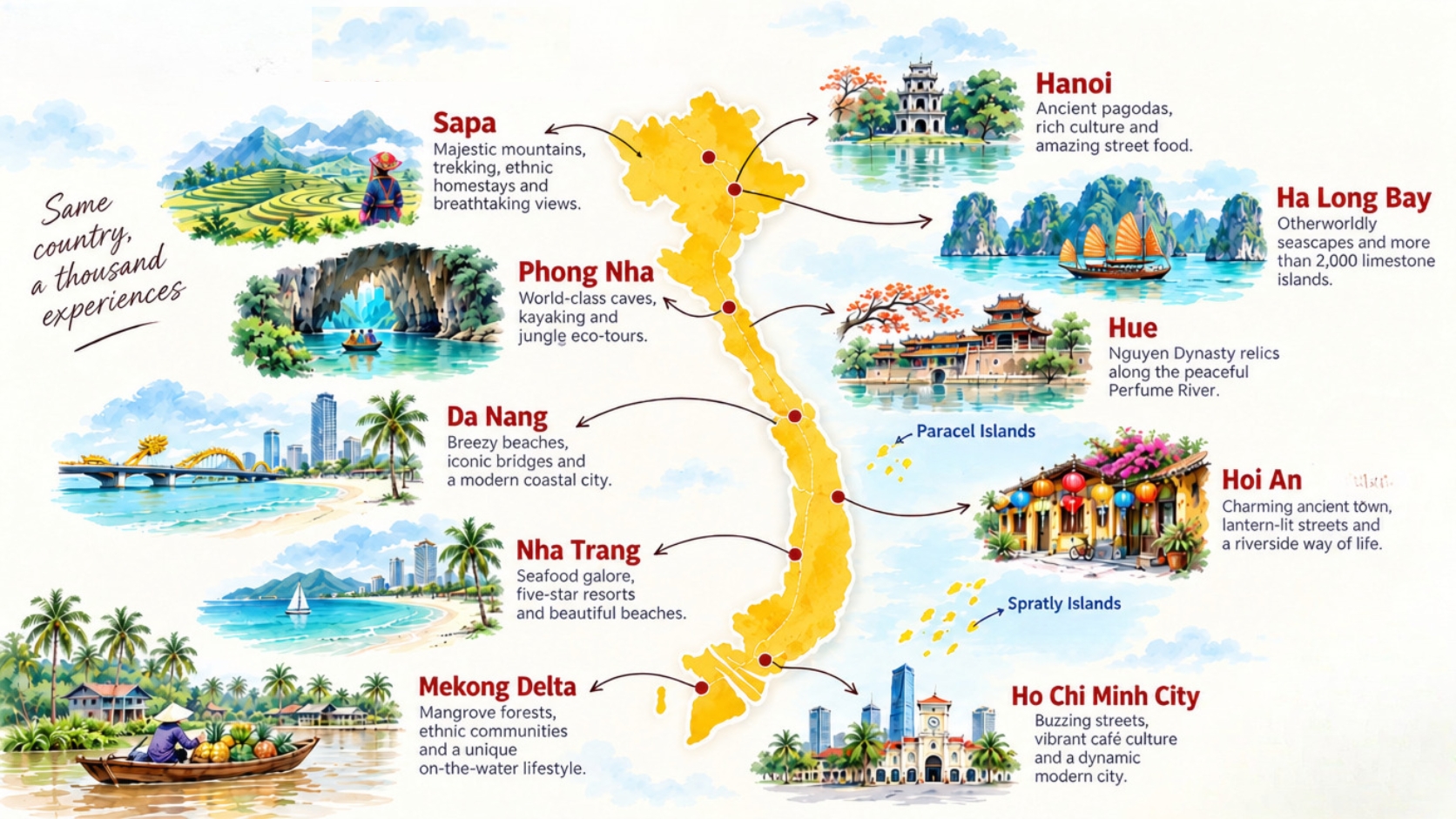
I have seen many itineraries trying to combine Hanoi, Ha Long Bay, Sapa, Hoi An, Ho Chi Minh City, and Phu Quoc within just one week. While it may be possible on paper, the reality is that you may spend more time packing, transferring, waiting at airports, and sitting in transportation than actually enjoying each destination.
From my experience, Vietnam is a destination that rewards slower travel. If you only have a few days, consider focusing on one region and exploring it more deeply:
-
Northern Vietnam is ideal for travelers interested in culture, history, and mountain landscapes, with destinations such as Hanoi, Ninh Binh, Sapa, and Ha Giang.
-
Central Vietnam is a great choice if you want a mix of beaches, heritage sites, and local cuisine, including Hue, Da Nang, and Hoi An.
-
Southern Vietnam offers a different atmosphere with the energy of Ho Chi Minh City, the Mekong Delta, and relaxing destinations such as Phu Quoc.
Instead of trying to see everything, choosing fewer destinations often allows you to experience Vietnam in a more meaningful way.
Choose the Right Time to Visit Vietnam
Many travelers assume Vietnam is a tropical country, so the weather is hot all year round. While this is partly true, Vietnam’s climate can vary significantly because the country stretches across different geographical regions. Understanding the differences between the north, central, and southern regions will help you plan your itinerary and pack more appropriately.
-
Northern Vietnam, including Hanoi, Sapa, and Ha Giang, experiences clearer seasonal changes. Winters can be surprisingly cool, especially in mountainous areas. If you plan to go trekking or explore highland regions, bring a light jacket.
-
Central Vietnam, including Hue, Da Nang, and Hoi An, usually has sunny dry seasons, but heavy rain can occur during certain periods and may affect outdoor activities, especially in coastal areas.
-
Southern Vietnam, including Ho Chi Minh City, the Mekong Delta, and Phu Quoc, has a warmer climate throughout the year. The rainy season usually brings short but heavy showers rather than all-day rain.
One tip I always recommend is not to check the weather for only one city. If you are traveling across Vietnam, look at each destination separately because conditions can be very different from north to south.
Get a SIM/eSIM Before Exploring Vietnam
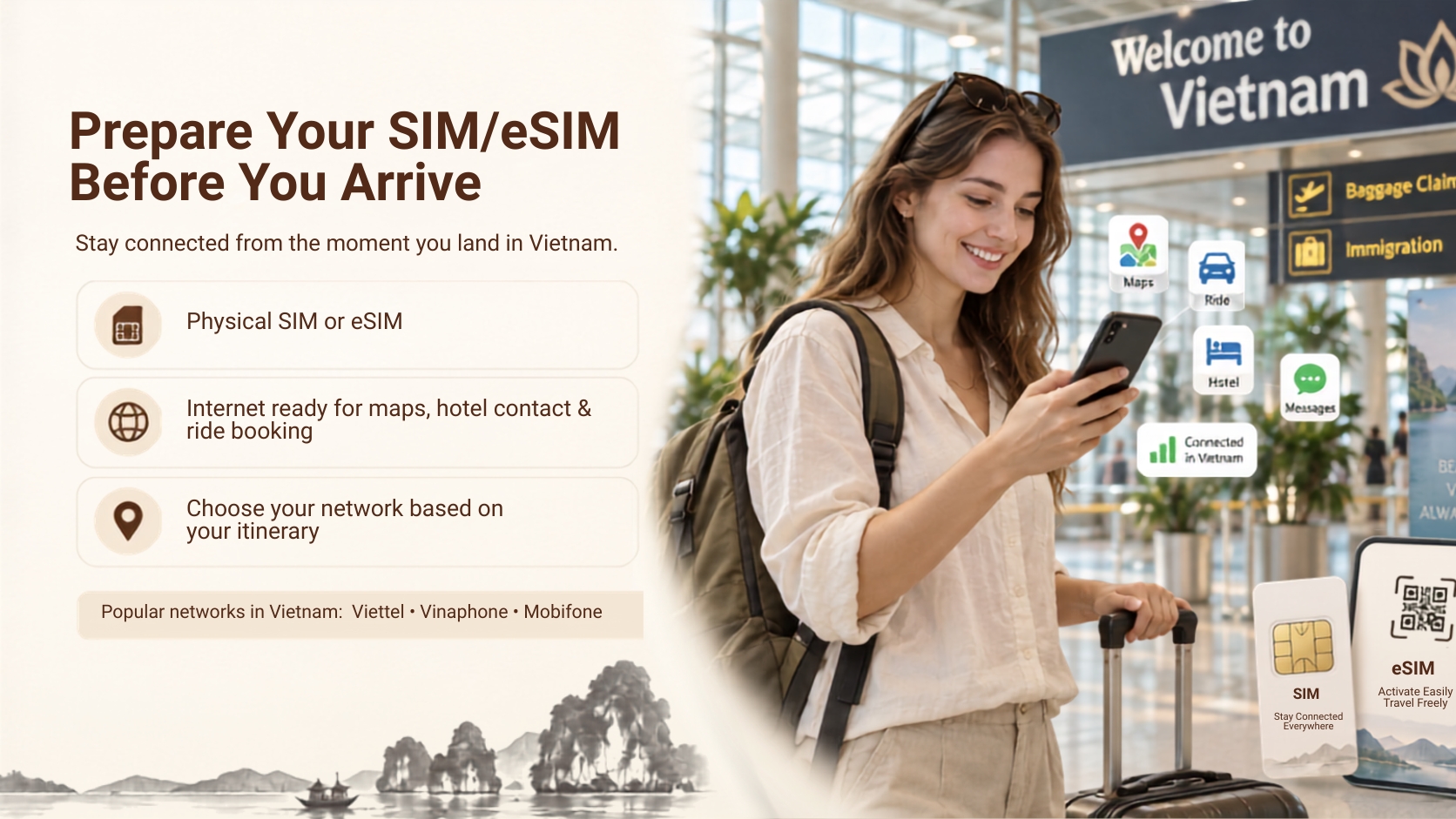
After traveling multiple times, one thing I have learned is that having internet access from the moment you arrive can make your trip much easier. A stable connection allows you to use maps, book transportation, contact your hotel, translate information, and handle unexpected situations during your first few hours in Vietnam.
International travelers can choose between a physical SIM card and an eSIM, depending on their needs.
-
Physical SIM cards can be purchased at airports, official mobile network stores, or authorized retailers after you arrive.
-
eSIMs are a convenient option for travelers who prefer to set up their connection before departure and go online immediately after landing.
The three main mobile network providers in Vietnam are Viettel, Vinaphone, and Mobifone. From my experience, choosing a SIM card is not only about finding the cheapest option. Your travel route matters more.
If you are mainly staying in major cities such as Hanoi, Ho Chi Minh City, or Da Nang, most providers offer reliable coverage. However, if you plan to visit mountain areas, islands, or more remote destinations, choosing a provider with wider coverage can make a noticeable difference.
If you prefer to prepare your connection before arriving, Vietnam Skyservice offers SIM/eSIM services for international travelers, helping you stay connected from the moment you land and making the first days of your Vietnam trip more convenient.
Useful Apps to Download Before Traveling to Vietnam
There are a few apps that I almost always use whenever I travel around Vietnam. Having them ready before arrival can save time and make daily transportation much easier.
-
Grab is one of the most useful apps for getting around cities. You can book cars, motorbikes, and food delivery. One of the biggest advantages is that you can see the price before confirming, so there is no need to negotiate with drivers.
-
Google Maps is another essential tool. Besides navigation, I often use it to find restaurants, cafes, check reviews, and estimate travel times between locations.
-
Google Translate becomes especially helpful when traveling to areas where English is less commonly spoken. The camera translation feature is useful for reading menus, signs, and basic information.
Besides these, if you plan to book tours, hotels, or local services, it is also helpful to keep commonly used messaging apps available so you can communicate easily with service providers when needed.
Understanding Vietnamese Currency and Payment Methods
The first time you see Vietnamese currency, you may feel slightly confused because there are many zeros on the bills. The 20,000 VND and 500,000 VND notes, for example, have similar colors, which can make it easy to double-check before paying if you are not familiar with the currency yet.
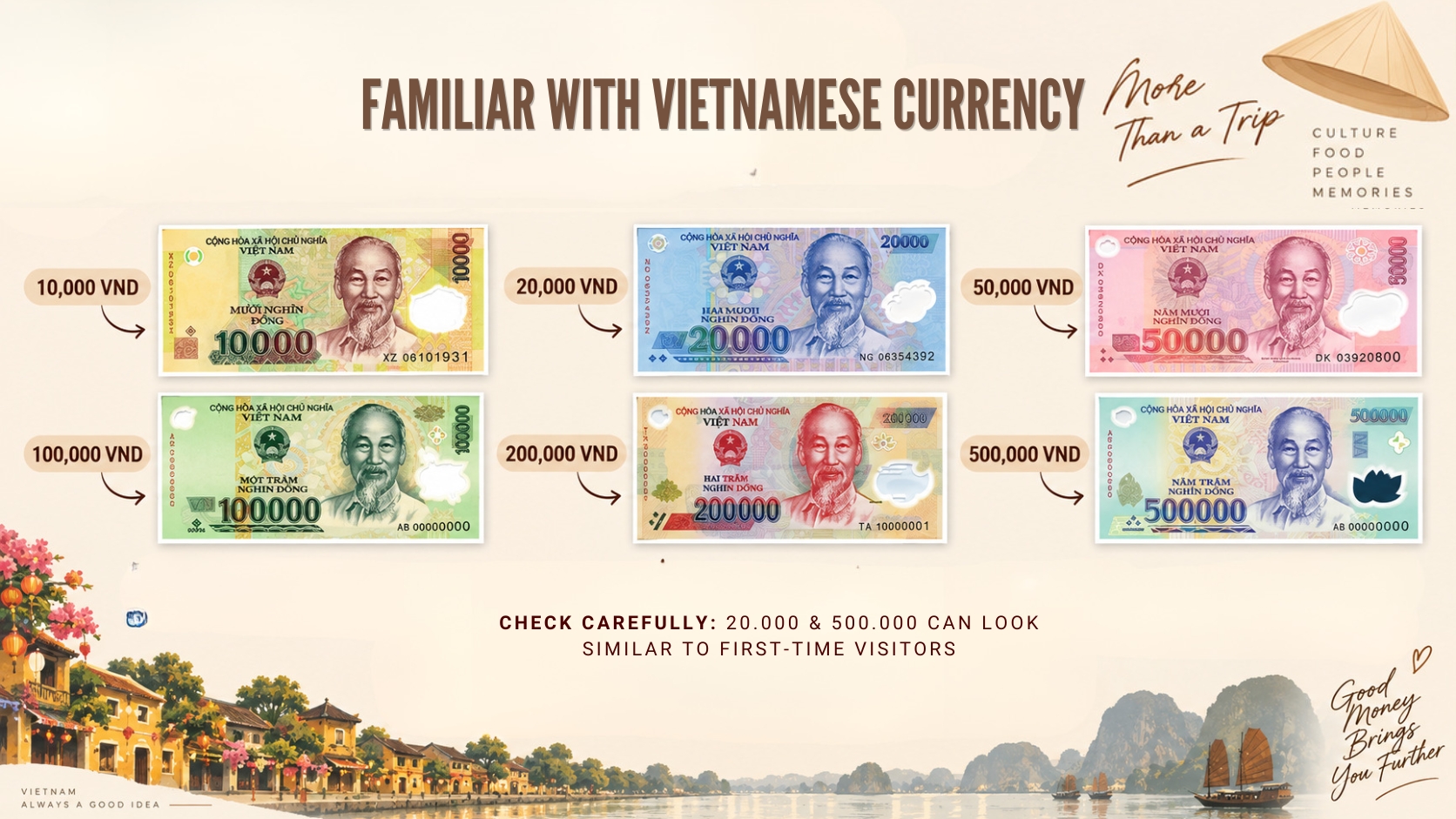
From my experience, I would not recommend trying to convert every single purchase into your home currency. Instead, remember a few common price ranges so you can quickly understand the general cost of things in Vietnam. For example:
-
A small bottle of water usually costs around 10,000–20,000 VND.
-
A local coffee usually costs around 20,000–50,000 VND.
-
A simple local meal is often around 40,000–100,000 VND per person.
-
A Grab ride within the city varies depending on distance, but you can always check the estimated price directly in the app.
During the first few days, I usually keep some smaller bills such as 10,000, 20,000, and 50,000 VND for convenient payments at street food stalls, small shops, local markets, or parking areas.
International cards are becoming increasingly accepted in Vietnam, especially at hotels, shopping malls, larger restaurants, and tourist-oriented businesses. However, I would not recommend relying on cards completely. Some of the most memorable experiences in Vietnam often happen at smaller local places — where cash is still the preferred payment method.
Transportation Tips for Traveling Around Vietnam
In major cities such as Hanoi, Ho Chi Minh City, and Da Nang, Grab is one of the most convenient transportation options for international travelers. The app allows you to check prices in advance, choose your vehicle type, and avoid the need to negotiate fares. If you are traveling from the airport or carrying large luggage, arranging transportation in advance can make your arrival much smoother.
For longer journeys between destinations, choose your transportation based on distance, travel time, and the type of experience you want:
-
Domestic flights: Best for long-distance routes such as Hanoi–Ho Chi Minh City, Hanoi–Da Nang, or Da Nang–Ho Chi Minh City. Flying can save a significant amount of time when traveling across the country.
-
Limousine buses or private cars with drivers: Suitable for shorter routes such as Da Nang–Hoi An, Hue–Da Nang, or day trips. These options are also convenient for families, groups, or travelers carrying more luggage.
-
Train journeys: A great option if you prefer a slower pace and want to enjoy Vietnam’s landscapes along the way. Train travel offers a different perspective on local life that you may miss when flying.
If comfort and flexibility are your priorities, especially after a long international flight or when traveling with a customized itinerary, a private car with a driver can be worth considering. Vietnam Skyservice provides private transportation services in Vietnam, including airport transfers, intercity transfers, and customized journeys based on your travel needs.
How to Cross the Street Safely in Vietnam
For many first-time visitors, crossing the street can be one of the most memorable experiences when arriving in Vietnam. Seeing hundreds of motorbikes moving continuously through the streets of Hanoi or Ho Chi Minh City can feel overwhelming at first. You may wonder when the right moment to cross is or how vehicles will react when you step onto the road.
However, traffic in Vietnam has its own rhythm. Drivers are generally used to sharing the road with pedestrians and will often adjust their speed and direction based on the movement of people around them.
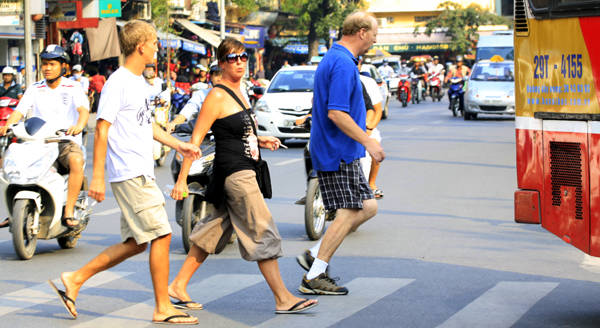
The most important thing is to stay calm and move predictably. A few simple tips:
-
Look carefully in both directions before crossing, especially for approaching motorbikes and cars.
-
Walk slowly and maintain a steady pace.
-
Avoid suddenly stopping, running, or changing direction while crossing.
One common mistake many visitors make is rushing across the street because they feel nervous. In reality, sudden movements can make it harder for drivers to anticipate your direction. Instead, take a deep breath, walk at a consistent pace, and let traffic naturally flow around you.
What to Eat and Food Experiences in Vietnam
Food is one of the biggest reasons many travelers fall in love with Vietnam. After exploring Vietnamese cuisine multiple times, what I appreciate most is not only the flavors but also how closely food is connected to everyday life.
If this is your first visit, I would not recommend only looking for highly rated restaurants online. Some of the most memorable meals often come from small local eateries where Vietnamese people eat every day. Here are some dishes worth trying:
-
Pho: Vietnam’s most famous dish, traditionally enjoyed as a popular breakfast option. Each region has its own variation, from the lighter northern style to richer southern versions.
-
Banh Mi: A convenient and affordable street food option with many different fillings, from grilled pork and pate to eggs and fresh herbs.
-
Bun Cha: A Hanoi specialty featuring grilled pork, rice noodles, fresh herbs, and a flavorful dipping sauce.
-
Bun Bo Hue: A Central Vietnamese noodle soup known for its richer and more complex flavors.
-
Cao Lau: A unique specialty from Hoi An, featuring distinctive noodles, pork, herbs, and a flavor profile that is difficult to find elsewhere.
-
Vietnamese Coffee: From iced milk coffee to egg coffee, this is an experience that should not be missed when visiting Vietnam.
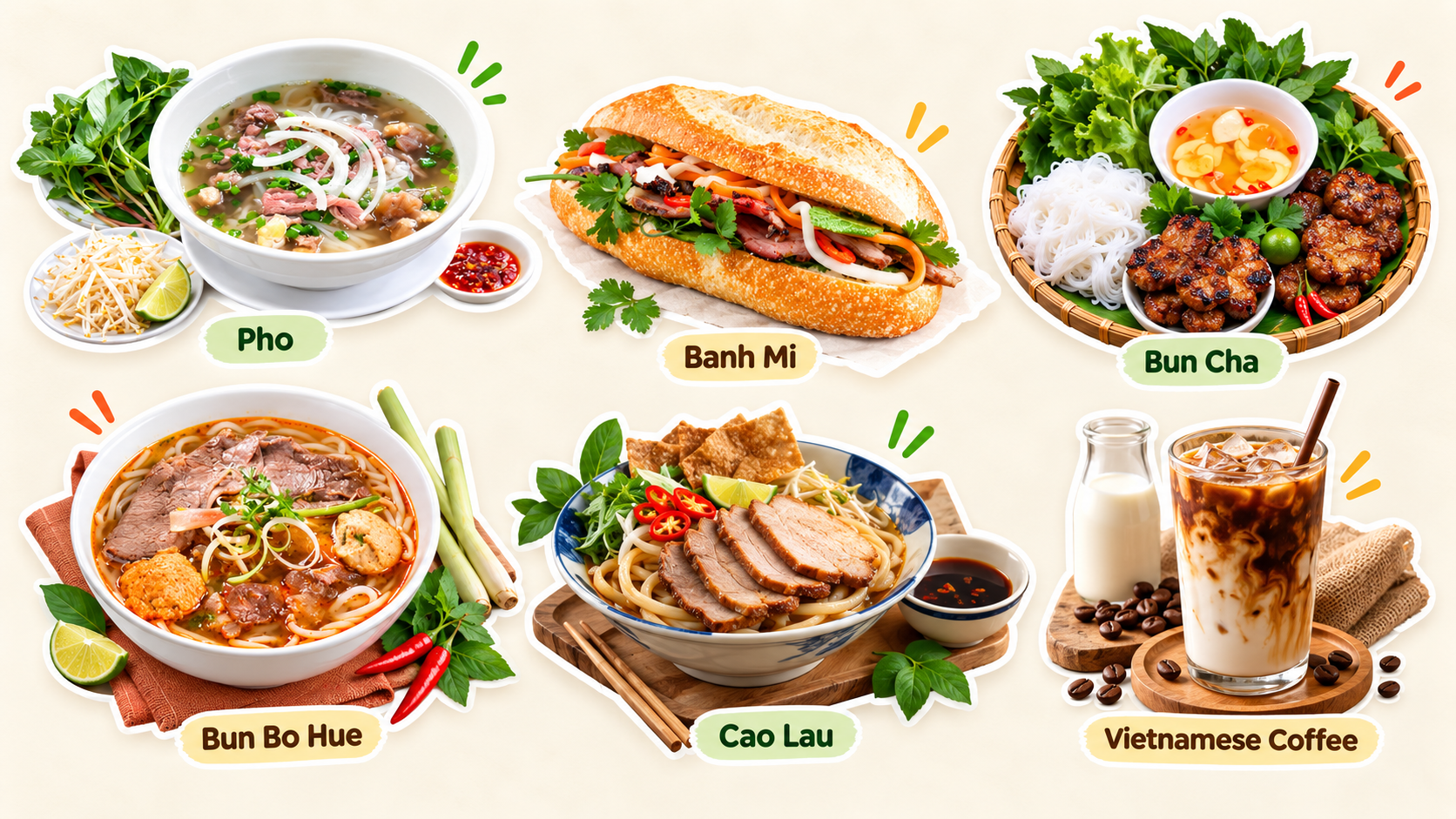
Instead of worrying too much about street food, I usually suggest looking for a few simple signs: choose places with local customers, freshly prepared dishes, and a steady flow of visitors.
One additional note for international travelers: tap water in Vietnam is generally not recommended for direct drinking. I usually choose bottled water or properly treated drinking water to avoid unnecessary health issues during the trip.
Understanding Vietnamese Culture and Local Etiquette
One of the things I enjoy most about traveling in Vietnam is discovering the small differences in how people communicate and interact in daily life. Vietnamese culture places a strong emphasis on politeness, respect, and maintaining harmony in social situations. If a misunderstanding happens, staying calm and communicating in a friendly way will usually lead to a better experience for everyone.
In many situations, Vietnamese people tend to avoid creating discomfort or embarrassment for others in public. Because of this, speaking too loudly, showing frustration openly, or confronting someone aggressively may create an uncomfortable atmosphere. A few small cultural tips that can help you connect better with locals:
-
Avoid pointing directly at someone with your finger, especially in formal situations.
-
When giving or receiving something in a respectful setting, using both hands is considered polite.
-
Observe how locals behave in different situations and follow the surrounding customs.
These are not strict rules, but small gestures that can help you feel more comfortable and welcomed during your time in Vietnam.
Learn a Few Basic Vietnamese Phrases
You do not need to become fluent in Vietnamese before visiting Vietnam. However, from my experience, learning just a few simple phrases can make a surprisingly big difference when interacting with locals. Many Vietnamese people appreciate visitors who make an effort to speak their language, even if the pronunciation is not perfect.
Here are some useful phrases:
-
Xin chào — Hello
-
Cảm ơn — Thank you
-
Xin lỗi — Sorry / Excuse me
-
Bao nhiêu tiền? — How much?
-
Không cay — Not spicy
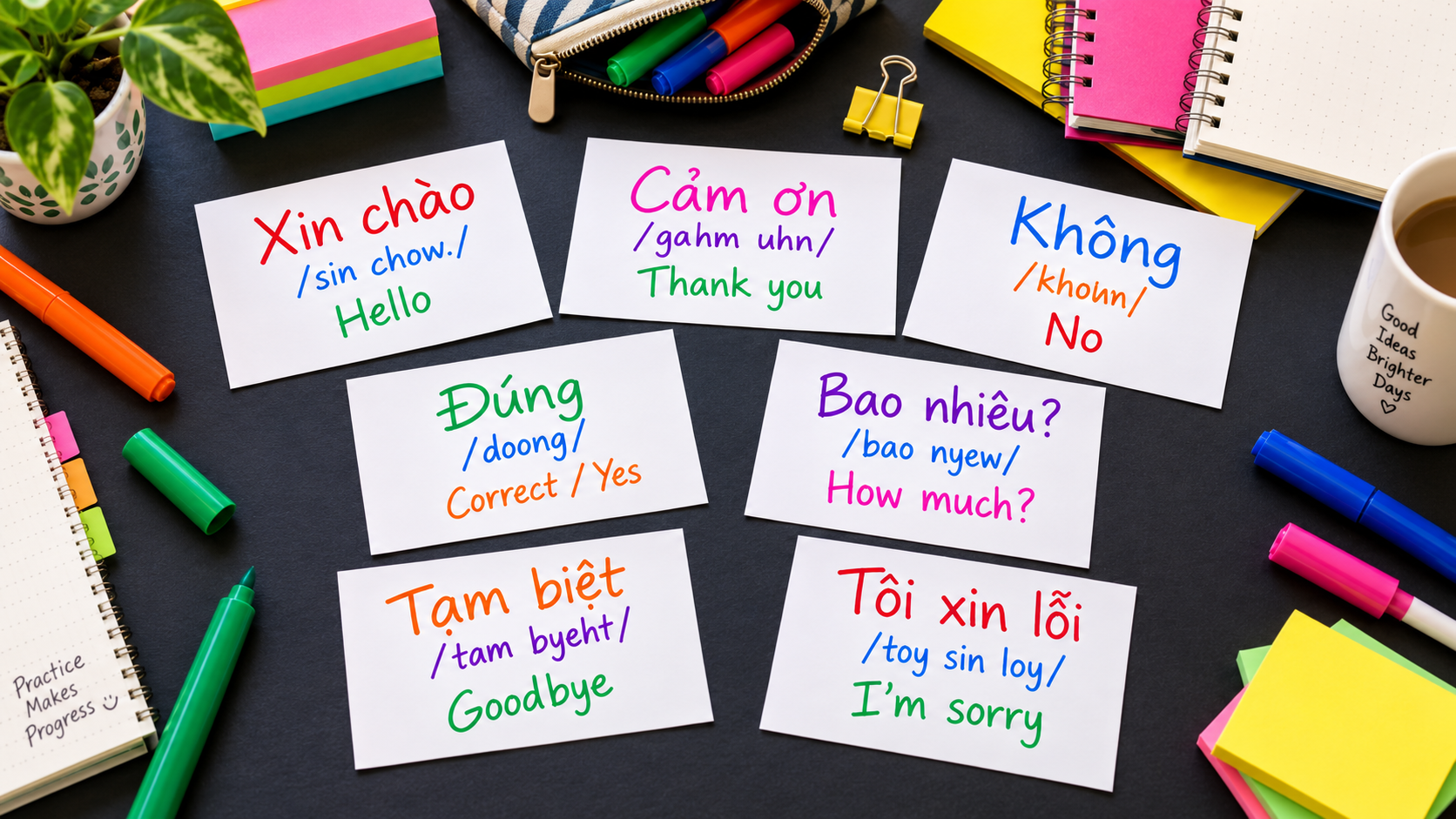
Vietnamese is a tonal language, which means the meaning of a word can change depending on pronunciation. Do not worry if you cannot say everything correctly at first. A friendly attitude and willingness to try are often appreciated more than perfect pronunciation.
One small tip: when you are unsure how to address someone, using friendly terms such as “anh” or “chị” in everyday situations can feel more natural. These forms of address are an interesting part of Vietnamese communication culture and reflect the importance of relationships and respect in daily conversations.
Things to Know When Visiting Temples, Pagodas, and Cultural Sites
Vietnam has many cultural, historical, and religious sites worth exploring — from ancient pagodas in Hanoi and royal heritage sites in Hue to the historic streets of Hoi An. These places are not only tourist attractions but also important parts of Vietnamese history, beliefs, and everyday life. When visiting, take some time to observe the surroundings and respect the atmosphere instead of focusing only on taking photos.
A few things to keep in mind:
-
Dress appropriately, especially when visiting temples, pagodas, or places of worship.
-
Keep your voice at a moderate level and avoid disturbing others.
-
Do not touch statues, religious objects, or worship areas.
-
Check local rules before taking photos, especially in areas with restrictions.
If you want to photograph local people, particularly in rural areas or ethnic minority communities, it is always better to ask for permission first. This small gesture shows respect and often leads to more natural and meaningful interactions.
Common Travel Situations to Be Aware Of
Vietnam is generally a welcoming and safe destination for international travelers. However, just like traveling anywhere in the world, being aware of a few common situations can help you avoid unnecessary inconvenience.
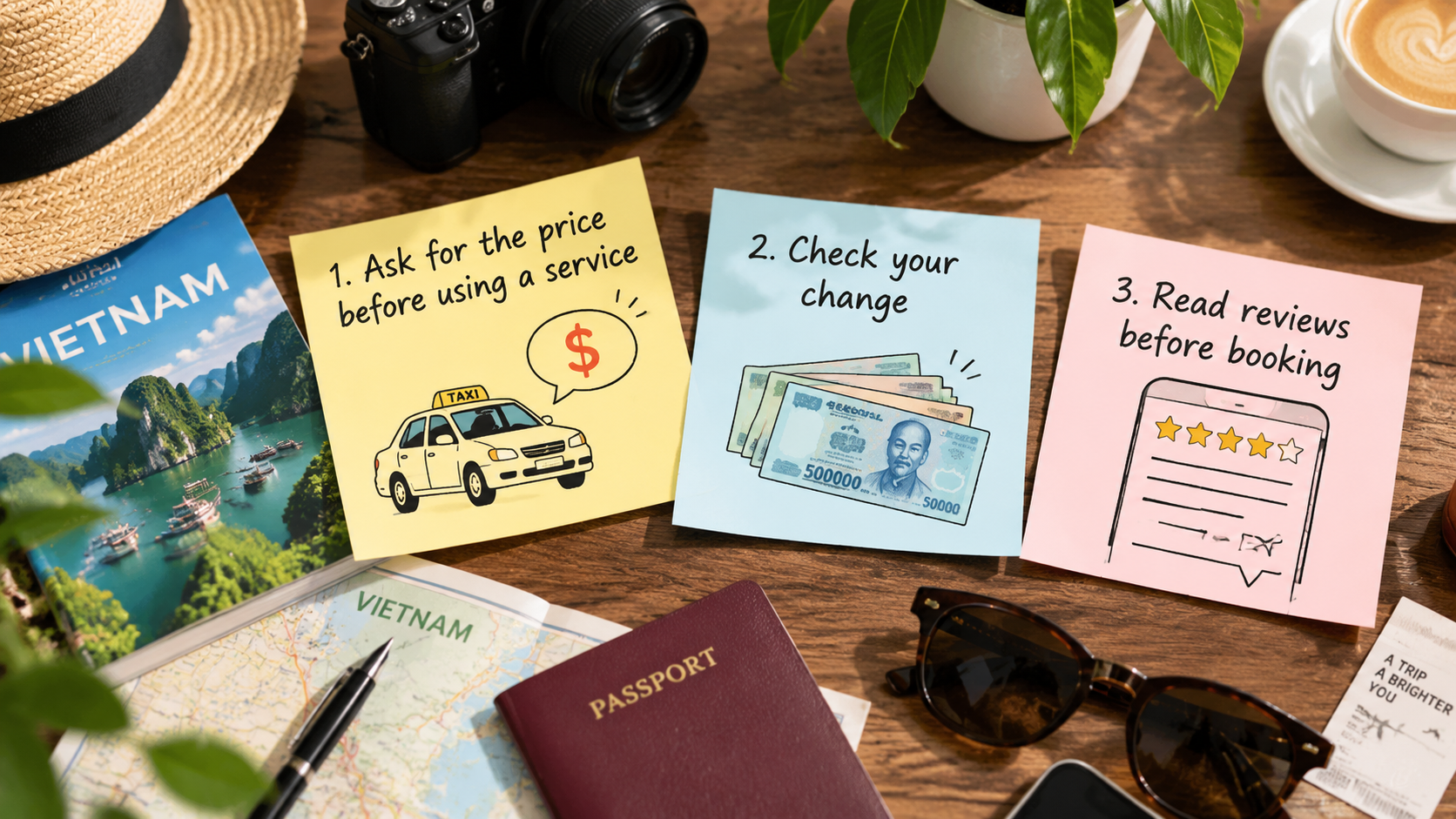
- Confirm prices before using services: For services without clearly displayed prices, always confirm the cost before agreeing, especially for: taxis or transportation services that are not booked through apps, photography services at tourist attractions, certain activities marketed toward visitors. Using trusted platforms or checking prices in advance can help you make more informed decisions.
- Double-check your change when paying: Vietnamese currency has many different denominations, and some banknotes have similar colors. When shopping at local markets, small stores, or busy tourist areas, take a moment to check your change before leaving. This is not about being suspicious — it is simply a good habit when handling an unfamiliar currency.
- Read reviews before booking services: Before booking tours, hotels, or local experiences, check reviews from multiple sources instead of relying only on ratings. Detailed feedback from previous travelers often provides more useful insights about service quality, communication, and what to expect.
Packing Tips Before Your Trip to Vietnam
After many trips, I have learned that smart packing is not about bringing more things — it is about bringing the right things. Vietnam can be hot, humid, and you may find yourself walking more than expected, especially when exploring cities, markets, and historical areas. Comfort should be a priority. Some essentials worth packing:
-
Comfortable walking shoes.
-
Lightweight and quick-drying clothes.
-
A light jacket if visiting Northern Vietnam or mountain areas.
-
Sunscreen.
-
Personal medication.
-
A portable power bank.
-
A small bag for important documents.
If you plan to visit multiple destinations, especially when taking domestic flights or long-distance transportation, traveling with lighter luggage can make your journey much easier.
Prepare Travel Services Before Your Trip for a Smoother Experience
One thing I have realized after many journeys is that the first few hours after landing can influence how you feel about the entire trip. After a long flight, simple tasks such as finding a SIM card, arranging transportation, or figuring out how to get to your hotel can take more time and energy than expected. To make your arrival more comfortable, consider preparing essential services before your trip:
-
Vietnam SIM/eSIM: Stay connected immediately after arrival for maps, communication, and transportation apps.
-
Private airport transfer: Have a vehicle waiting instead of searching for transportation after immigration.
-
Private car with a driver: A convenient option for families, groups, or travelers who prefer a more flexible itinerary.
With Vietnam Skyservice, international travelers can arrange essential services before arrival, helping create a smoother start to their Vietnam journey from the very beginning.
Final Thoughts
Vietnam is a destination with countless experiences waiting to be discovered. From the energy of busy city streets and unique local cuisine to beautiful landscapes and meaningful cultural encounters, every region offers something different. For first-time visitors, some aspects of Vietnam may take a little time to adjust to. However, a small amount of preparation before your trip can help you feel more confident and spend more time enjoying the experiences that truly matter.