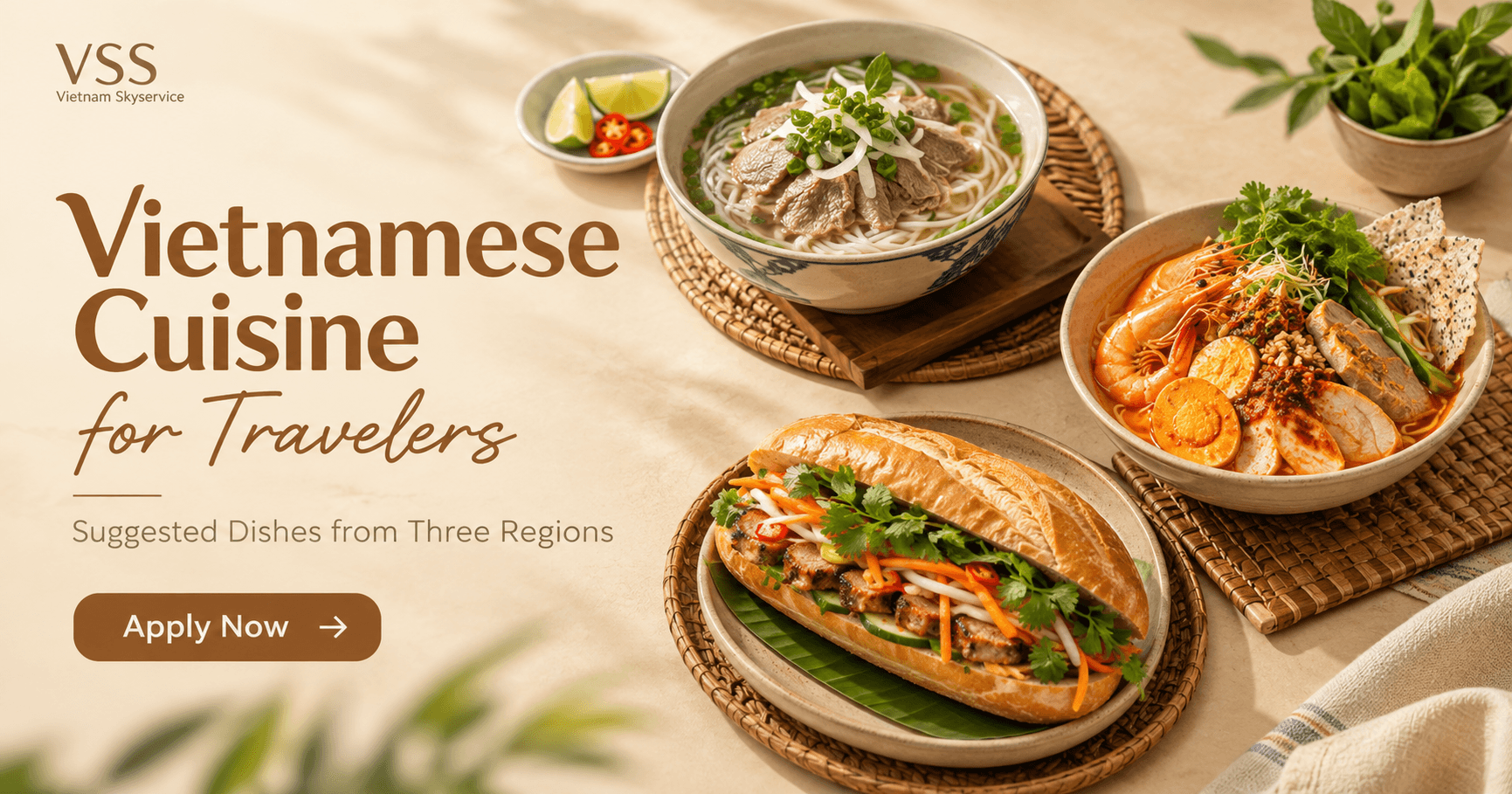
The appeal of Vietnamese cuisine begins with everyday meals. A steaming bowl of phở on a Hanoi morning, a plate of freshly steamed savory cakes in Hue or a crisp bánh xèo in the Mekong Delta can all make you want to linger a little longer. To explore Vietnamese cuisine, start with familiar dishes, then leave room for new flavors. The suggestions below will help you decide what to try, where to enjoy it and how to plan a journey from North to South around your own tastes.
Understanding Vietnamese Cuisine Through the Way It Is Enjoyed
Many Vietnamese dishes are enjoyed by combining the different elements served together. With bún chả, these are grilled pork, rice vermicelli, greens and dipping sauce. With bánh xèo, a piece of the hot pancake is wrapped in greens before dipping. Crisp and soft textures, sour and salty notes, and the fragrance of herbs vary from one bite to the next, offering different ways to enjoy the same dish.
This also explains why lime, chilies or separate dipping sauces often appear on the table. When getting acquainted with Vietnamese cuisine, taste first, then add seasonings a little at a time. If you are unsure how to mix, wrap or dip a dish, ask the person serving you (their advice can also be a way to start a conversation).
Flavors vary between eateries and locations, so treat the characteristics of each region as a starting point for exploration.
Northern Vietnam: Delicate Flavors and Fragrant, Familiar Dishes
On a morning in Hanoi, make time for a bowl of phở or a plate of freshly made bánh cuốn. With phở, pay attention to the broth, the aroma of onions and the fragrant spices before adding lime or chili. Bánh cuốn has a different appeal: thin, tender rice sheets, a filling of meat and wood ear mushrooms, and fried shallots. These dishes reflect a quality often found in northern Vietnamese cuisine: flavors are combined with a light touch, allowing you to recognize each ingredient.
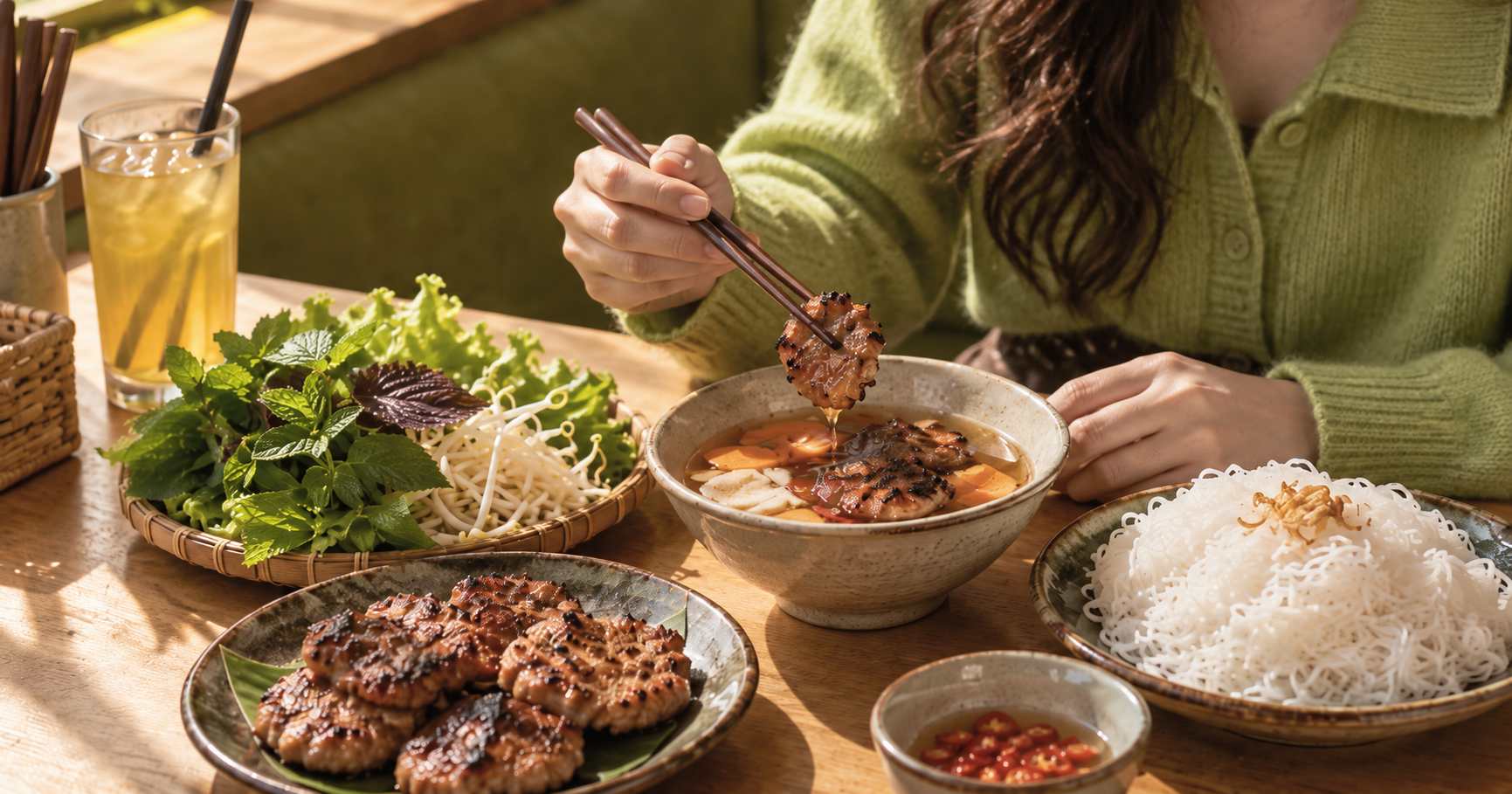
At lunchtime, bún chả is a good choice after a morning walk around the Old Quarter. Fragrant grilled pork, lightly charred fat, soft rice vermicelli and greens create bites that range from rich to refreshing. Add a little vermicelli to the bowl of dipping sauce, enjoy it with the pork and greens, then adjust each bite to your taste.
If you are traveling with family or friends, Hanoi chả cá suits a meal you can take your time over. Turmeric-marinated fish is heated with scallions and dill, then eaten with rice vermicelli, peanuts and dipping sauce. Everyone puts together their own portion while sharing the fish, still hot, at the table.
Beyond Hanoi, your Vietnamese cuisine journey can continue to Hai Phong for bánh đa cua: Reddish rice noodles with a tender, chewy texture, field crab broth and accompaniments that vary by eatery. If you would like to combine food with scenic sightseeing, Ninh Binh offers another option, with crispy rice and goat dishes.
Central Vietnam: Rich Flavors, from Noodle Bowls to Small Plates of Savory Cakes
Continue into Central Vietnam and you will discover another side of Vietnamese cuisine. In Hue, lemongrass and fermented shrimp paste give the broth of bún bò its depth. Another everyday dish, cơm hến, is appealing for its combination of rice, small clams, greens, peanuts and crunchy accompaniments. Spiciness varies between eateries; ask beforehand, as some of the seasoning may already be added to the dish.
One experience worth making time for in Hue is ordering several kinds of savory cakes to share. Bánh bèo, bánh nậm and bánh lọc differ in their dough or batter, wrapping and fillings. Among these soft, chewy dishes, Hue bánh khoái brings a crisp shell, served with greens and a thick dipping sauce. Ordering small amounts at a time lets you appreciate the differences while leaving you eager to try the next dish.
In Hoi An, cao lầu deserves a meal of its own. Chewy noodles, char siu pork, greens and crispy fried toppings come together with just a little richly flavored liquid. Mix everything thoroughly to appreciate both the flavors and the chewy, crisp textures of each ingredient.
Mì Quảng also usually comes with little broth, but its noodles, greens, peanuts and toasted rice crackers give it a character of its own. Choose chicken or shrimp and pork, depending on the menu, then break off a little rice cracker to enjoy alongside it. Hue, Da Nang and Hoi An therefore make a convenient group of destinations for exploring the many ways to enjoy Vietnamese cuisine. If your journey extends to Nha Trang, bún cá and nem nướng offer more options for meals by the coast.

Southern Vietnam: Varied Meals to Suit Your Taste
In Ho Chi Minh City, start with cơm tấm, a dish combining small grains of broken rice, grilled pork chops, pickled vegetables and a prepared fish sauce dressing. Add bì, shredded pork skin, or chả trứng, steamed egg meatloaf, depending on your appetite. Eaten together, the savory pork, the slight tang of the accompaniments and the fish sauce create a balanced combination. It is an approachable introduction to Vietnamese cuisine in the South.
With hủ tiếu Nam Vang, choose between the soup and dry versions. A bowl of soup is ideal when you want to enjoy the noodles in hot broth; the dry version lets you mix them with sauce, with the broth usually served separately. On days packed with sightseeing, bánh mì makes a convenient meal, with a crisp crust and fillings ranging from meat and Vietnamese sausage to pâté and eggs.
In the Mekong Delta, set aside a group meal for lẩu mắm or bánh xèo. Lẩu mắm has a distinctive, pronounced aroma and is eaten with fish, meat or seafood and a wide variety of vegetables. Bánh xèo is often large, with a thin, crisp shell; coconut milk may be added to the batter for richness and fragrance. Cut off a piece, wrap it in greens and dip it into the prepared fish sauce while the pancake is still hot.
Can Tho is a good place to combine these meals with exploring the waterways of the Mekong Delta. If you would like to add more beach time to your Vietnamese cuisine journey, consult the Phu Quoc travel guide to plan an itinerary that suits you.

Planning a Vietnamese Cuisine Journey with Time to Enjoy It
Choose eateries close to your sightseeing route and leave breaks between meals. Each day, prioritize one or two dishes you most want to try, keeping your other meals flexible around your itinerary.
If you have 10-14 days, consider the following Vietnamese cuisine itinerary from North to South, allowing time for travel and checking in:
|
Destination |
Suggested Stay |
Experiences to Make Time For |
|
Hanoi |
3-4 days |
Have phở for breakfast, try bún chả and share chả cá with your group |
|
Hue |
2-3 days |
Enjoy bún bò and cơm hến, and share a selection of savory cakes |
|
Da Nang – Hoi An |
2-3 days |
Try mì Quảng and cao lầu, combining sightseeing with time at the beach |
|
Ho Chi Minh City |
3-4 days |
Explore cơm tấm, hủ tiếu and different varieties of bánh mì |
With 5-7 days, focusing on one region gives you time to explore more thoroughly. You could choose Hanoi with Hai Phong or Ninh Binh; Hue, Da Nang and Hoi An; or Ho Chi Minh City with Can Tho. If relaxation is your priority, Phu Quoc can replace the Can Tho leg of your trip.
Tips for Enjoying Vietnamese Cuisine More Comfortably
Choose food that has just been cooked and is still hot, along with drinks in factory-sealed bottles or water that has been safely treated, following CDC recommendations.
If you have allergies or dietary requirements, save a note in Vietnamese on your phone and discuss your needs before ordering. Ask about the ingredients in broths and dipping sauces, as well as whether utensils are shared. In Vietnamese cuisine, even a dish made mostly with vegetables may be seasoned with fish sauce or shrimp paste, or prepared with meat stock.
You can ask for “ít cay” (less spicy), “để riêng ớt” (chilies on the side) or “ít đường” (less sugar), depending on what the eatery can adjust. When choosing seafood, check whether the price is per portion or by weight. Having a little cash also makes payment easier at places that do not accept cards.
Final Thoughts
This guide has introduced dishes from all three regions, from North to South, cities suited to exploring each group of dishes, and practical tips for dining in Vietnam. To give your culinary journey a smooth start at the airport, consider a fast track service to reduce the time spent on immigration procedures and an airport transfer to reach your accommodation quickly. If you would like further advice on your itinerary, airport services or other assistance, contact our customer service team for guidance tailored to your needs.