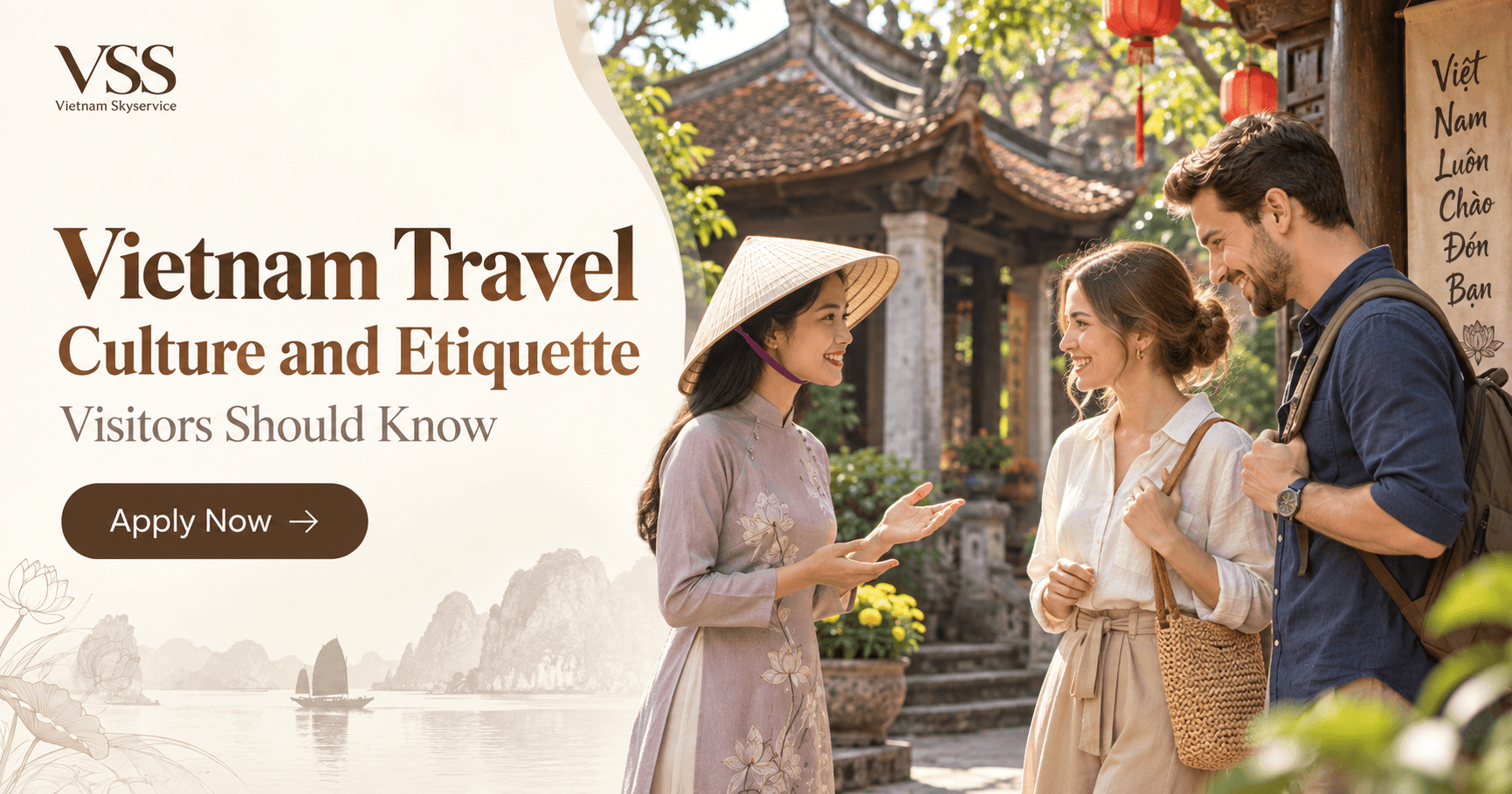
Traveling in Vietnam becomes more rewarding when you understand a little about local culture and everyday etiquette. A well-timed greeting, considerate table manners or a thoughtful approach to photography can make your encounters feel more personal. In this article, VSS shares practical tips to help international visitors feel confident as they explore and connect with people. Customs can vary between families, regions and situations, so observing and asking when you are unsure is always a good place to start.
Greetings and Forms of Address When Traveling in Vietnam
Start with a Few Simple Phrases
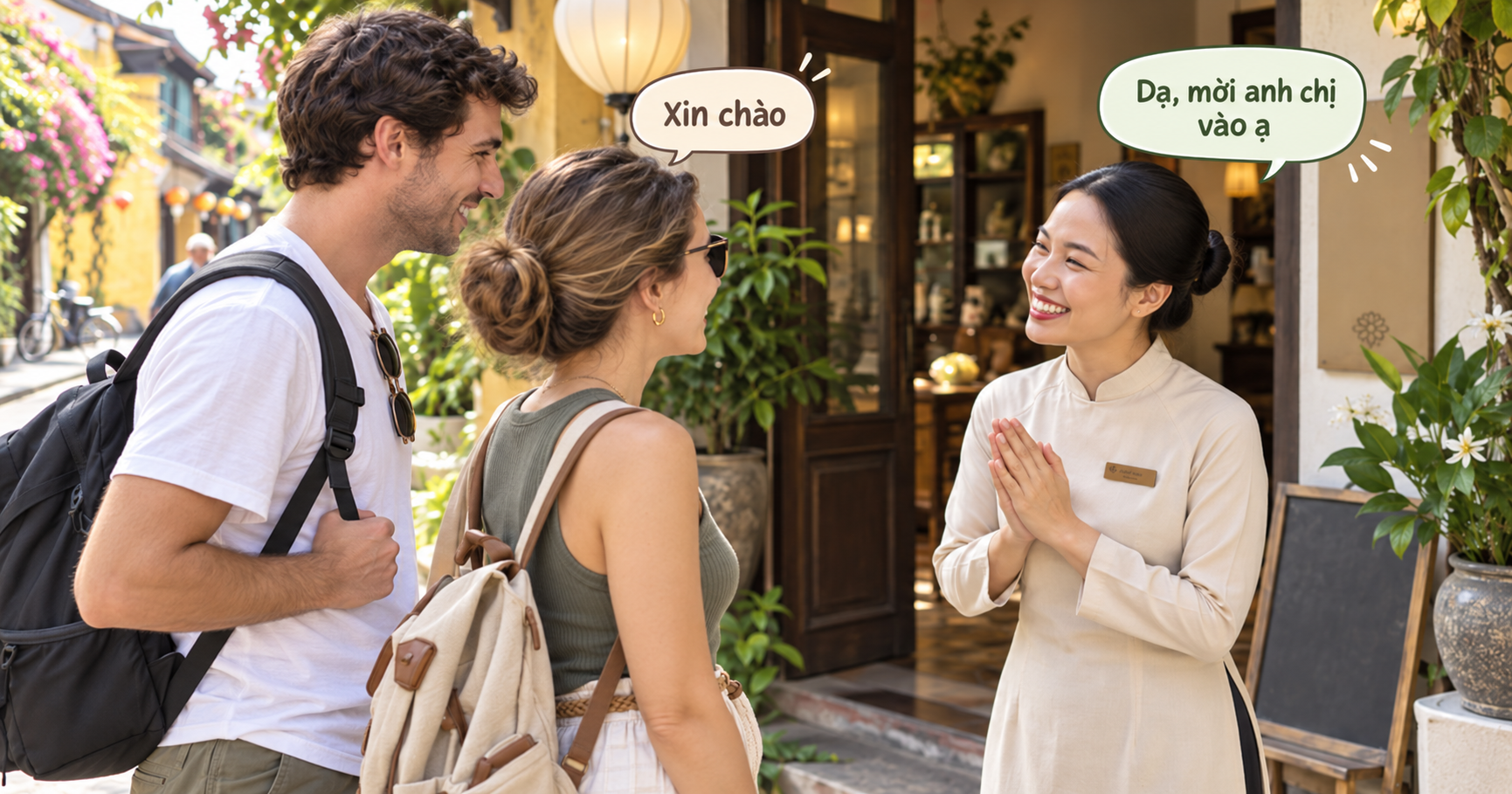
“Xin chào” (Hello), “Cảm ơn” (Thank you) and “Xin lỗi” (Excuse me/Sorry) are useful in many situations, from checking into a hotel to ordering food or asking for directions. Speaking slowly and clearly, with a friendly manner, will make it easier for others to understand you.
During your first few days in Vietnam, the pronunciation may feel unfamiliar. Save a few everyday phrases on your phone so you can refer to them when needed. A simple greeting and a smile can often help a conversation get started naturally.
Understand Forms of Address Without Memorizing Every Rule
Vietnamese uses different forms of address to reflect age and relationships. You may hear “anh” for a slightly older man or “chị” for a slightly older woman, while “cô”, “chú” and “bác” may be used for someone from an older generation. “Em” is often used for someone younger, while “bạn” works in many conversations between people of a similar age.
If you are unsure, you can use a general greeting or ask how the other person would like to be addressed. Adding “ạ” at the end of a sentence, as in “Cảm ơn ạ” (a polite way to say “Thank you”), can make your words more respectful, especially when speaking with older people.
Before your trip to Vietnam, take a look at these useful Vietnamese phrases for travelers to prepare for everyday conversations.
Visiting Sacred Sites in Vietnam
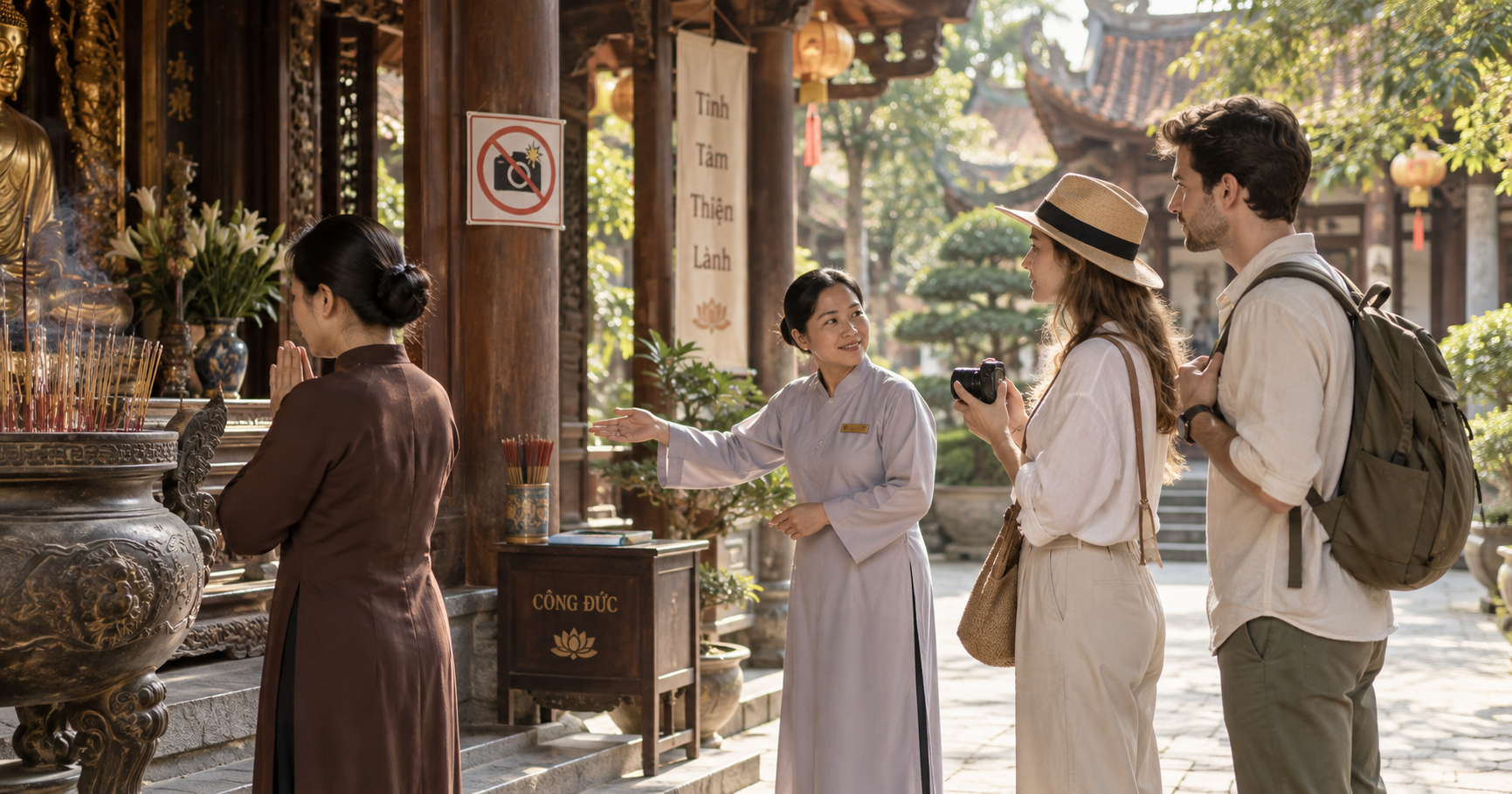
Temples, pagodas and other religious sites offer opportunities to learn about architecture and beliefs while remaining active places of worship and community life. When visiting during your trip to Vietnam, take a few moments to read the visitor guidelines and observe before entering.
Dress Appropriately and Keep the Space Quiet
Clothing that covers your shoulders and knees is a suitable choice for places of worship. For hats and footwear, follow the signs or instructions from the staff responsible for each area. The Viet Nam National Authority of Tourism's etiquette guide also emphasizes dressing modestly when visiting temples and pagodas.
Inside, speak softly, set your phone to silent and avoid blocking walkways. If you are traveling with young children, explain beforehand that people need quiet here to pray.
Take Photos and Join Rituals Respectfully
A good photo should be taken where photography is permitted, with consideration for those taking part in religious activities:
-
Check for signs prohibiting photography or flash.
-
Keep your distance from people praying, and avoid asking them to move for a photo.
-
Do not touch statues or altars, or move ritual objects, without permission.
-
If you would like to light incense or make a donation, ask where to do so and follow the guidance provided.
You can observe without taking part in a ritual. During your trip to Vietnam, showing sincere interest and being considerate can help you feel more comfortable learning about these places.
Dining Etiquette When Traveling in Vietnam
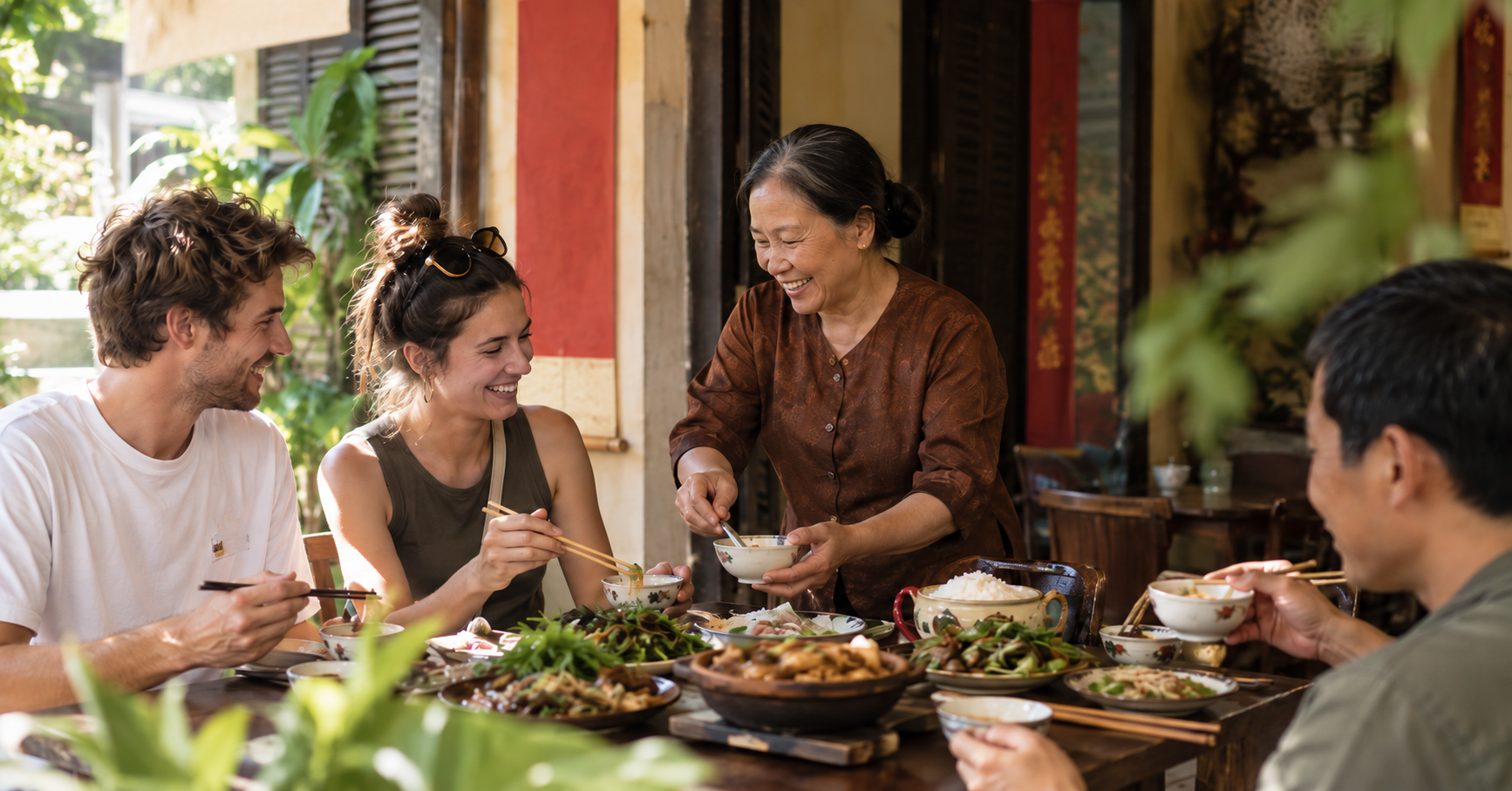
Sharing a meal with a local family can be a memorable part of traveling in Vietnam. A family meal usually consists of several dishes placed in the middle of the table for everyone to enjoy together, rather than individual portions ordered separately.
When You Are Invited to a Meal
Let your host show you where to sit and observe how everyone begins. In many families, people invite one another to eat before starting. You can say “Mời cả nhà ăn cơm” (Let's eat, everyone) or respond to the invitation with a smile. If you are unsure, waiting for your host or an older family member to begin is a considerate approach.
When offered more food, you can thank your host and accept a portion that suits your appetite. If you are full, “Cảm ơn, tôi no rồi” (Thank you, I'm full) is a polite way to decline.
Using Chopsticks and Sharing Food
A few small habits can help everyone feel comfortable at the table:
-
Use serving utensils when available: Choose the spoon or chopsticks provided for shared dishes. If you cannot see any, you can ask for a set.
-
Rest your chopsticks neatly when you pause: Avoid leaving them standing upright in a bowl of rice, as this is associated with religious rituals.
-
Ask for help if chopsticks feel unfamiliar: You can request a spoon or fork, although availability varies between eateries.
Be Clear When Ordering and Paying
When dining out during your trip to Vietnam, mention your preferences as you order, such as “Không cay” (Not spicy), “Ít đường” (Less sugar) or “Không rau mùi” (No cilantro/coriander). If there are foods you need to avoid, ask about the ingredients rather than relying only on the dish's name.
To pay, you can say “Cho tôi thanh toán” (I'd like to pay, please) or “Cho tôi xin hóa đơn” (Could I have the bill, please?). Depending on the venue, staff may bring the bill to your table or direct you to the counter. If a charge is unclear, politely ask for an explanation before paying.
Interacting in Public Spaces in Vietnam
You might start your morning in a quiet café and visit a busy market soon afterward. Each place has its own pace, and adjusting how you interact to suit the setting can make traveling in Vietnam more pleasant.
Keep Your Voice at a Suitable Volume and Ask When Unsure
On public transport or in enclosed spaces, avoid loud conversations and playing audio on your phone that could disturb others. If a misunderstanding arises, try speaking slowly, using a translation app or asking a staff member to help clarify things.
At airports, supermarkets and service counters, follow the queue or ticket number system. At street food stalls, ask the vendor where to order and how customers are served if you are unsure.
Ask Before Taking Photos
Capturing local life is an enjoyable part of visiting Vietnam, but ask permission before taking a close-up photo of someone. For children, ask a parent or guardian first and respect the child's wishes if they do not want to be photographed.
You can ask “Tôi chụp ảnh được không?” (May I take a photo?). If the person declines, put your camera away and continue your visit.
Keep Price Discussions Friendly
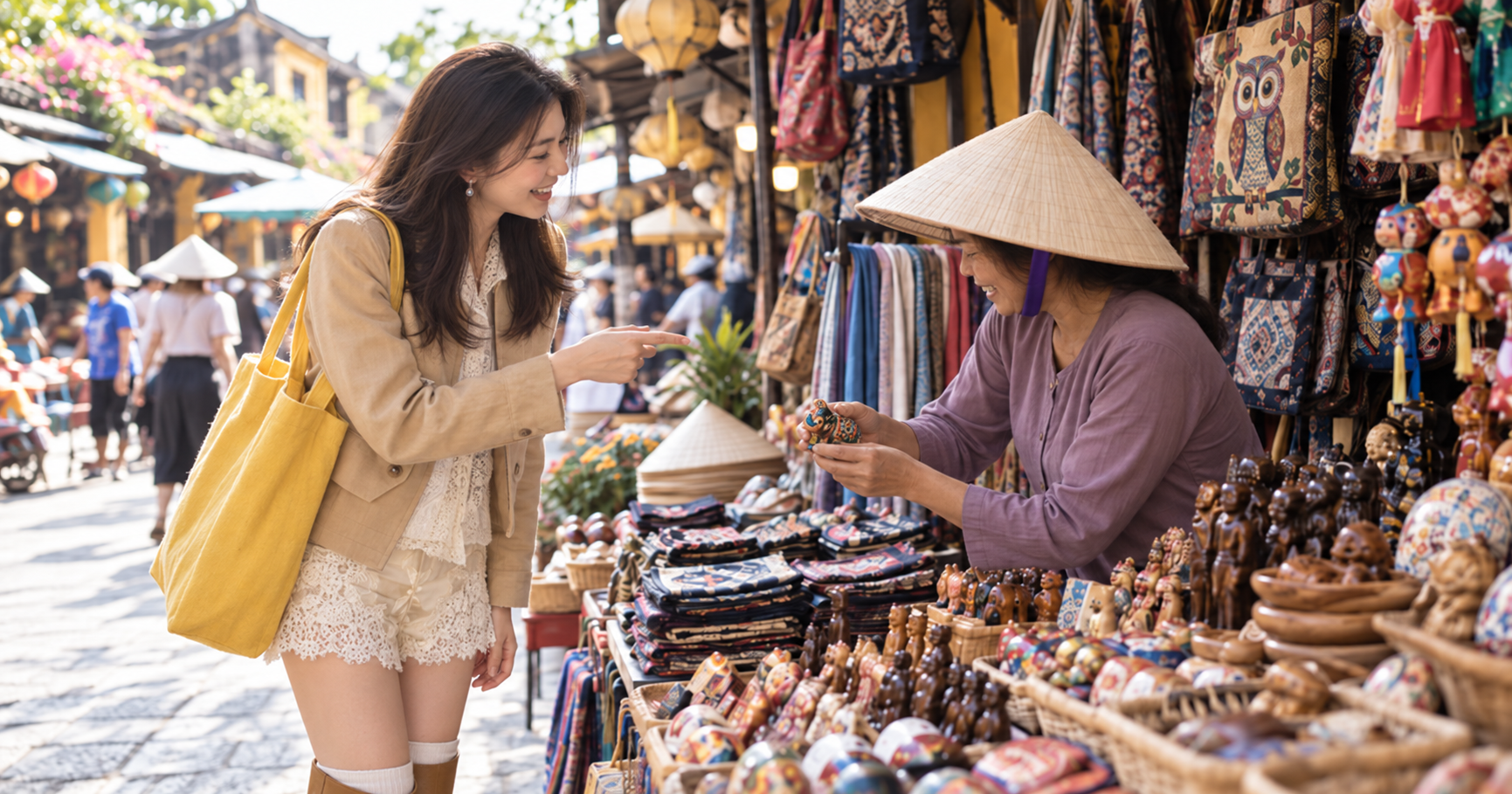
At some market stalls, you can ask “Bớt một chút được không ạ?” (Could you lower the price a little, please?). However, prices are not negotiable everywhere, so respect fixed prices in shops or on menus.
If you cannot agree on a price, it is fine to say thank you and leave. Shopping in Vietnam is more enjoyable when both buyers and sellers are free to decide what works for them.
Things to Avoid When Traveling in Vietnam
Alongside the situations above, a few additional points can help you avoid unnecessary misunderstandings:
-
Touching people without permission: Avoid patting someone's head, hugging or touching children or people you do not know without their consent.
-
Pointing directly at someone's face: When asking for directions or indicating an object, a gentle gesture with an open hand is likely to be better received.
-
Imposing your views in conversation: When discussing history, politics or beliefs, ask with an interest in learning and respect the other person's choice not to discuss the topic.
-
Taking photos where they are prohibited: Follow instructions at government offices, security areas and other places with specific restrictions.
-
Littering or smoking in ways that affect others: Keep places clean, use trash bins and smoke only where permitted.
If you accidentally do something inappropriate during your trip to Vietnam, apologize and adjust your behavior in line with the guidance you receive. A sincere apology and a willingness to listen can often help the conversation continue comfortably.
Final Thoughts
Traveling in Vietnam offers many opportunities to connect with local people through everyday conversations and activities. Start with a greeting, listen attentively and ask when you are unsure. These small gestures can help you feel more confident while putting the people welcoming you at ease.
To leave more time to enjoy your trip, you can also arrange internet access and transport in advance. If you need a SIM/eSIM, an airport transfer or fast track assistance, speak with the VSS team about your itinerary and preferences for advice suited to your needs.